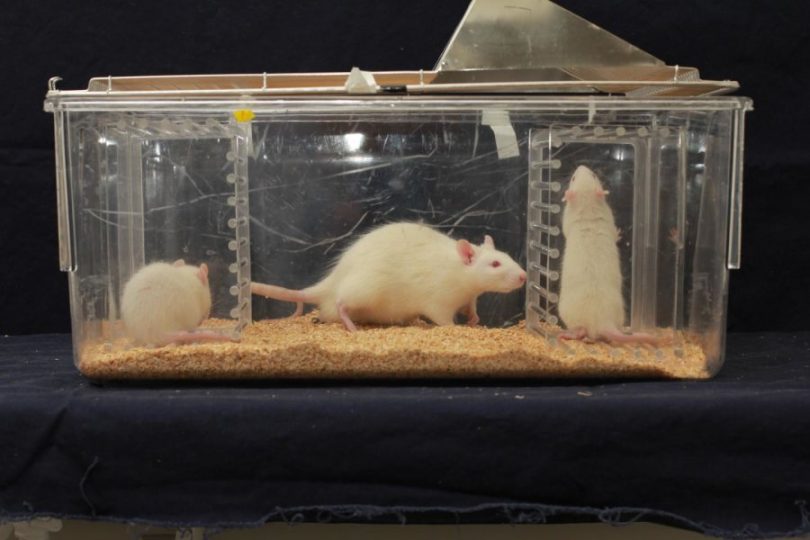
Searching for clues to complex social behaviors, experiments found that laboratory rats – much like humans – will approach distressed juveniles but avoid distressed adults — responses known as social affective behaviors, researchers report. Additionally, the brain's insular cortex region is required for proper reactions to others in distress. Further, changes in insular cortex excitability, caused by the hormone oxytocin, likely account for the social affective behaviors.Original Article
Brain’s insular cortex mediates approach and avoidance responses to others in distress