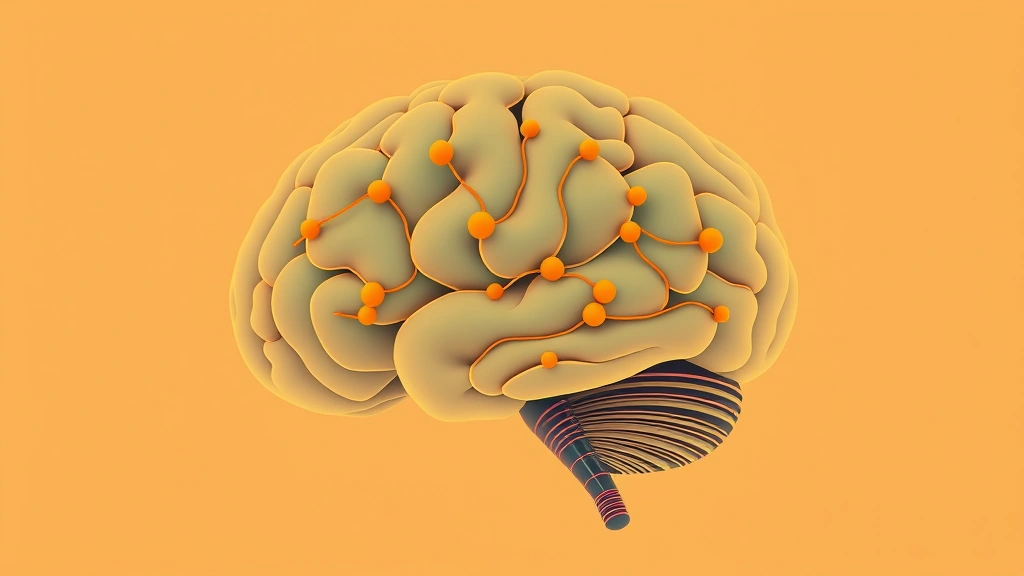
If keeping lost weight off feels like fighting your own body, that is because, in a sense, you are. Researchers describe how the brain actively defends body weight — a biological reflex that helps explain why the pounds so often come back.
Obesity researchers Valdemar Brimnes Ingemann Johansen and Christoffer Clemmensen explain that the brain has “powerful mechanisms for defending body weight” and can effectively remember a previous higher weight.
What defending weight involves
When you lose weight, the body reads it as a survival threat: hunger hormones rise, cravings intensify, and energy expenditure drops — all pushing back toward what the brain now treats as normal.
Each of those is measurable rather than metaphorical. Levels of the hunger hormone ghrelin rise after weight loss and stay elevated. Leptin, which signals energy stores to the brain, falls in proportion to lost fat, and the brain reads low leptin as impending starvation.
The metabolic side is the less intuitive part. After weight loss the body burns fewer calories than a person of that weight who never dieted — an adaptive reduction beyond what smaller body size alone would predict, and it persists for years.
The combination means a person maintaining reduced weight is hungrier and requires fewer calories than someone of the same size who was never heavier. They are not doing the same thing and failing; they are doing something harder.
Why the system is asymmetric
The defence operates far more forcefully against weight loss than against gain, which is central to understanding the problem.
Overfeeding studies show the body resists weight gain weakly — some increase in energy expenditure occurs, and it is easily overwhelmed. The response to deficit is much stronger and much more persistent.
That asymmetry makes evolutionary sense. Starvation killed reliably throughout human history; carrying extra fat rarely did. A system tuned to prevent the fatal error would be expected to look exactly like this.
An ancient system in a modern world
Human bodies evolved to guard fat reserves through periods of food scarcity, a system that backfires in an environment of cheap, calorie-dense food.
As the authors put it, “obesity is not a personal failure, but rather a biological condition shaped by our brains, our genes, and the environments we live in.”
The framing is not merely sympathetic. If the mechanism is a defended set point rather than insufficient discipline, then interventions relying on sustained conscious restraint are working against a system specifically evolved to override conscious restraint — which predicts the observed failure rate rather than excusing it.
Why the drugs work while taken
The same biology explains a limitation of today’s blockbuster medicines. Drugs like Wegovy and Mounjaro mimic gut hormones that reduce appetite — but when people stop, the brain’s weight-defence system reasserts itself and weight often returns.
What these drugs do is supply a countervailing signal continuously. They act on the same appetite-regulating circuits, opposing the hunger drive while present.
They do not appear to reset the defended weight itself. Withdrawal removes the counter-signal, the underlying defence is unchanged, and regain follows — which is why the pattern resembles stopping blood-pressure medication more than finishing a course of antibiotics.
What next-generation therapy would need
Understanding these circuits, researchers suggest, could point toward therapies that turn down the signals driving the body back to its old weight, rather than only suppressing appetite while the drug is taken.
That is a considerably harder target. Suppressing appetite means opposing an existing signal; resetting a defended weight means changing what the brain treats as correct, which requires understanding how the set point is encoded and stored.
The observation that the brain can remember a previous higher weight suggests something durable is stored — possibly in the structure of the hypothalamic circuits regulating energy balance. If it is encoded, it may in principle be alterable.
What follows practically
The implication for people currently taking these drugs is that indefinite treatment may be the realistic expectation, which raises questions of cost, long-term safety and access that the field has not settled.
Why bariatric surgery behaves differently
One intervention appears to alter the defended weight rather than merely oppose it, and the contrast is informative about what would be required.
Weight loss after bariatric surgery is substantially more durable than after dieting. Patients maintain much of the loss for a decade or more, and the counter-regulatory response is weaker than the degree of weight loss would predict.
The explanation is not mechanical restriction, which was the original assumption. Procedures that restrict stomach capacity without rerouting the intestine work less well than those that change how food meets the gut, and hormonal changes after surgery are substantial — gut hormones including GLP-1 rise markedly, and appetite frequently falls rather than rising as it does after dieting.
That suggests the defended weight is set partly by signals from the gut, and that changing those signals durably can move it. It is also why surgery remains the most effective long-term intervention despite being invasive — and why understanding what it does biologically is a route toward achieving the same effect pharmacologically.
This is general information about obesity science and is not medical advice. Talk to a healthcare professional about weight management.