Ultragenyx Stock Halves After Its Angelman Syndrome Drug Fails a Pivotal Trial
GTX-102 missed all its goals in a Phase 3 study for the rare disorder, wiping out a would-be blockbuster and pushing the company toward significant cost cuts.
Category
GTX-102 missed all its goals in a Phase 3 study for the rare disorder, wiping out a would-be blockbuster and pushing the company toward significant cost cuts.
The Department of Veterans Affairs’ electronic health-record overhaul has ballooned from $10 billion to $27 billion — and lawmakers say they learned of it from the news, not the company.
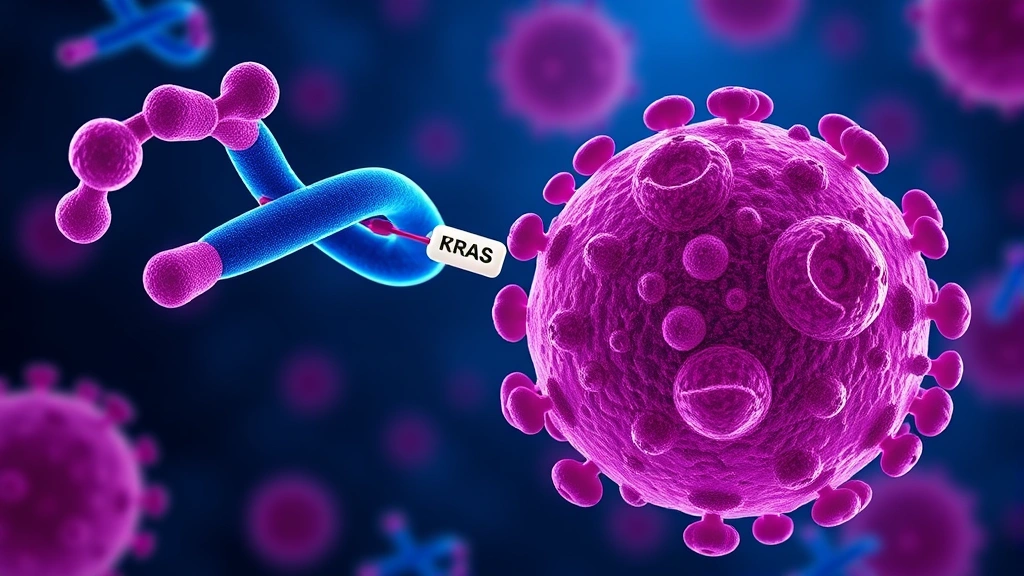
The deal licenses HMPL-A830, an antibody-delivered therapy designed to shut down both EGFR and KRAS — a driver mutation in many colorectal, lung and pancreatic cancers.
The company helps patients steer through cancer care — and is now building a broader oncology group backed by Humana, CVS and JPMorgan’s Morgan Health.
The deal buys rights to an early-stage “tri-specific” antibody built to hit B cells — drivers of many autoimmune conditions — from multiple angles at once.
The state accuses pharmacy-benefit managers Express Scripts and Prime Therapeutics of an arrangement that drove down what pharmacies get paid — by as much as 80% on some drugs.
The TYK2 inhibitor failed all its main and secondary goals in systemic lupus — the latest setback for a drug class that has struggled to crack the disease.
The deal adds a platform that selectively destroys the rogue antibodies behind conditions like Graves’ disease — without broadly suppressing the immune system.
More than 90% of health systems have deployed third-party AI tools, yet fewer than half can validate them before use — leaving a governance gap that some, like UPMC, are racing to fill.
The FDA expanded tirzepatide’s label to include cutting cardiovascular risk in type 2 diabetes — a first for a GIP/GLP-1 drug and a boost for the world’s top-selling medicine.
Michael Polansky’s Outer Bio launched with $23M and an unusual pitch: not a drug company, but an AI platform screening compounds on living human skin.
After a string of research setbacks, Biohaven traded its most advanced medicine for upfront cash and future royalties — an unusual move to part with a key asset just before pivotal data.
A new MassBio snapshot shows venture money and IPOs surging even as the industry sheds jobs — a split between thriving young companies and downsizing giants.
The structured financing releases cash as seralutinib hits regulatory milestones, funding the biotech through a planned NDA submission for pulmonary hypertension.
Expressable becomes the first speech-therapy provider on Amazon’s Health Benefits Connector, which matches shoppers to digital-health services their employer plans already cover.
Licensing HM17321 from Korea’s Hanmi, Roche is chasing the next frontier in weight loss: shedding fat while preserving the muscle that today’s GLP-1 drugs also strip away.
The renewed alliance keeps subspecialty expertise, tumor conferences and clinical-trial access available to patients closer to home, with new local cancer services coming this autumn.
NICE has backed Eli Lilly’s Onswik, a weekly insulin injection, for type 2 diabetes — cutting jabs by about 85% for patients who struggle with daily dosing, pending final approval.
The revenue-cycle giant is adding an AI platform that files and clears insurer authorizations — targeting one of the most-hated bottlenecks in US healthcare.
The Dutch biotech will push its brain-signaling drug through a mid-stage trial for cognitive impairment in schizophrenia — a common, disabling problem with no approved treatment.
The company’s long-acting retina treatment failed to prove non-inferiority to standard therapy across the full trial, wiping out nearly $1 billion in market value.
After shelving its sickle cell program over safety concerns, Fulcrum is combining with Slate Medicines in a reverse merger built around a next-generation migraine drug.
The world’s largest biosimilar maker will commercialize up to 10 Henlius-developed copies of blockbuster biologics globally, positioning for one of the industry’s biggest-ever patent cliffs.
The Raleigh biotech priced its Nasdaq debut at $13 a share to fund mizagliflozin, an oral drug aimed at the dangerous blood-sugar crashes some patients face after bariatric surgery.
The Venrock-led round backs a platform that lets self-funded employers contract, in one deal, with thousands of advanced primary-care practices that sit outside insurance networks.
Adding BioLife’s cell-preservation technology to its bioprocessing tools, Repligen is betting on vertical integration as cell and gene therapies scale up.
The one-time gene therapy ST-920 is heading toward an FDA filing; PTC picked it up at auction after gene-medicine pioneer Sangamo filed for bankruptcy.
Retatrutide isn’t approved anywhere — but a gray market of compounders and ‘peptide’ sellers is already hawking copies, prompting Lilly to go to court.
Co-founded by Georg Schett — who showed CAR-T can drive lupus into remission — the Deerfield-backed startup aims to reset the immune system with more convenient antibodies.
K2 Therapeutics, a Flagship-style ‘hub-and-spoke’ biotech that in-licenses drug candidates worldwide, named the former Legend Biotech chief as its new leader.
BeOne gains Asian rights to Revolution’s RAS(ON) inhibitors and will test them with its own oncology drugs against some of cancer’s hardest targets.
Sobi gains commercial rights to lacutamab, a first-in-class antibody for cutaneous T-cell lymphoma now in a Phase 3 confirmatory trial and heading for accelerated approval.
The multi-modality site — making small molecules, biologics and antibody-drug conjugates — is part of BMS’s $40 billion U.S. push amid tariffs and reshoring.
The deal adds ABS-1230, an oral drug for KCNT1-related epilepsy that has no approved treatment — Jazz’s second epilepsy acquisition in a year.
The Nav1.8-inhibitor developer priced at the top of its range to fund a Phase 3-ready pain drug meant to rival Vertex’s Journavx, as biotech IPOs keep rolling.
The partnership pairs Evotec’s AI-driven discovery platforms with Odyssey’s disease biology to find small-molecule drugs for immune-driven conditions.
The digital musculoskeletal-care company is expanding into gut health — a huge, underserved market — with plans for one combined app in 2027.
The deal adds gildeuretinol, a modified vitamin A in Phase 3 for Stargardt disease, to Tarsus — a program championed by Vertex founder Josh Boger.
Backed by Bezos and Gates funds, the company’s fungal-genome platform yielded LIFE-001, a long-acting drug that suppresses transplant rejection while sparing the brain.
BMS will deploy Schrödinger’s new AI “co-scientist” and synthesis-planning tools alongside physics-based simulation to speed molecular design.