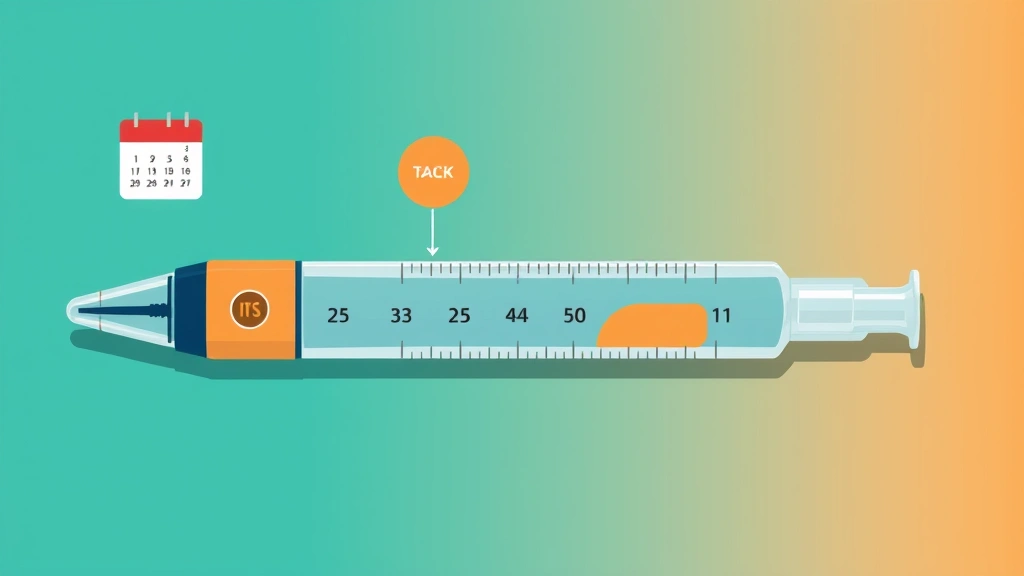
Eli Lilly’s once-weekly insulin, Onswik (efsitora alfa), has cleared an important hurdle toward UK use: England’s cost-effectiveness watchdog NICE has recommended it for the NHS, pending final marketing authorisation.
The proposition
A single weekly injection instead of a daily one — cutting injection frequency by roughly 85%, from 365 a year to 52.
NICE highlighted this as especially valuable for patients who find daily insulin hard to manage: older people, those with limited hand mobility, and people who need help injecting.
“Moving from daily injections to a single weekly dose could make a real difference to the day-to-day lives” of eligible patients, said NICE’s Helen Knight.
Why the named groups matter most
The specificity of that list is the substance of the recommendation, and it points at a problem larger than convenience.
Someone who cannot reliably inject themselves — through arthritis, tremor, visual impairment or cognitive difficulty — needs another person to do it. For many that means a district nurse visiting daily, or a family member organising their day around it.
A daily nursing visit is expensive, logistically demanding and frequently the limiting factor in whether insulin is used properly at all. Reducing it to weekly changes the arithmetic dramatically — which is a substantial part of why a cost-effectiveness body found the case persuasive.
There is also a group who are effectively undertreated because daily injection is unmanageable. Clinicians sometimes avoid or delay starting insulin in frail patients for exactly this reason, accepting worse glucose control as the lesser problem.
How weekly insulin works
Insulin normally clears from the body within hours, which is why basal insulins are engineered to release slowly and last around a day.
Extending that to a week requires more substantial modification — typically attaching the insulin molecule to a carrier that keeps it in circulation far longer, releasing active hormone gradually.
The engineering challenge is maintaining a steady, predictable level across seven days. Too much variation means high glucose at one end of the week and hypoglycaemia risk at the other, which would be worse than daily dosing rather than better.
The evidence
The recommendation rests on Lilly’s Phase 3 QWINT programme, in which Onswik delivered blood-sugar control equivalent to widely used daily long-acting insulins — insulin degludec and insulin glargine.
Equivalence is the correct target here, and worth stating explicitly. Nobody expected a weekly insulin to control glucose better than a well-managed daily regimen. The claim is that it achieves the same control with 85% fewer injections, and demonstrating non-inferiority against established comparators is precisely the right evidence for that claim.
Why type 2 first
Initial NHS use targets type 2 diabetes, which reflects a real clinical distinction.
People with type 2 diabetes on insulin typically use a basal insulin providing background coverage, and their own residual insulin production buffers fluctuations. A long-acting weekly product fits that pattern.
Type 1 diabetes is more demanding. Patients need basal insulin plus rapid-acting doses at meals, and they have no endogenous production to smooth errors. A weekly basal insulin is harder to adjust when circumstances change — illness, altered activity, changing requirements — because a dose given cannot be withdrawn for seven days.
The trade-off in long duration
That inflexibility is the substantive concern with weekly insulin generally.
With daily dosing, a clinician can adjust tomorrow. With weekly dosing, a dose that turns out to be too high remains in the system, and managing hypoglycaemia in someone with a week of insulin on board is a different proposition from managing it in someone whose dose will clear by morning.
The trial programme will have examined hypoglycaemia rates closely, and it is the metric to look for when full data are scrutinised.
Where it stands
NICE issued its positive recommendation in August 2026, following a positive opinion from the European Medicines Agency’s CHMP in June 2026; UK marketing authorisation from the MHRA is expected.
What NICE approval actually determines
The role NICE plays is frequently misunderstood outside the UK, and it is distinct from what a regulator does.
Marketing authorisation — from the MHRA here, or the EMA in Europe — establishes that a medicine is safe and effective enough to be sold. It says nothing about whether a health system should pay for it.
NICE answers that second question, assessing whether the benefit justifies the cost relative to existing treatment. A positive recommendation generally obliges the NHS in England to fund the medicine, which is why it determines access more directly than approval does — a drug approved but not recommended is available in principle and largely unavailable in practice.
That framing explains why the reduction in nursing visits featured so prominently. NICE weighs costs across the whole system, not just the drug price, and a therapy that is more expensive per dose while eliminating hundreds of home visits a year can be the cheaper option overall. For weekly insulin, that arithmetic is likely to have been decisive.
Weekly insulins are a closely watched category. If uptake follows, they could simplify treatment for millions and reshape a cornerstone of diabetes care that has required daily injection since insulin was first used. Regulatory and business news, not medical advice.