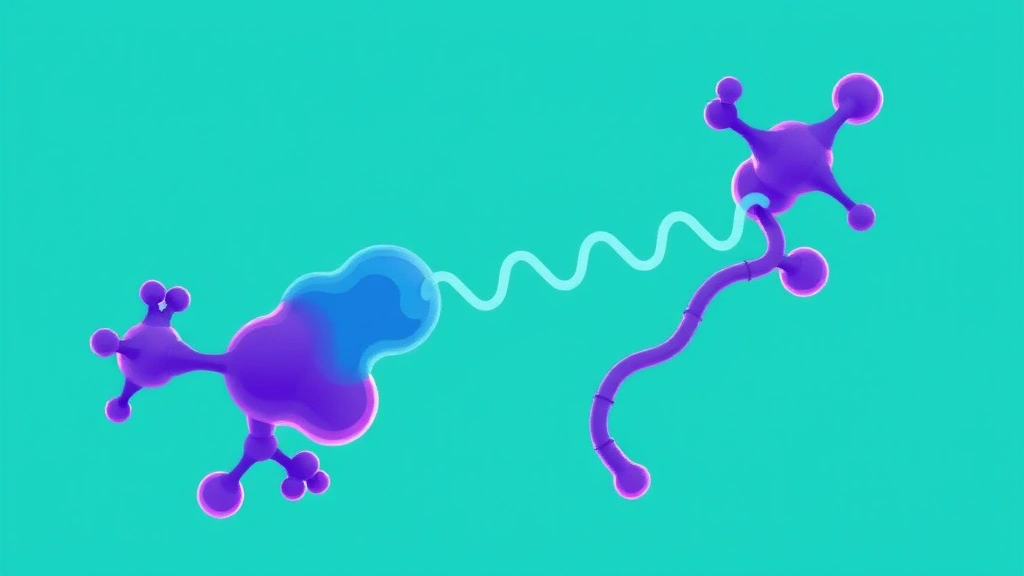
Scientists at Dana-Farber Cancer Institute have built a systematic way to discover molecular glues — drugs that trick the cell into destroying disease-causing proteins, including ones long considered impossible to target.
What a molecular glue does
A molecular glue degrader works by grabbing an E3 ligase — part of the cell’s protein-disposal machinery — and redirecting it to tag a target protein for destruction through the ubiquitin-proteasome system.
That system is the cell’s routine mechanism for controlled protein removal. E3 ligases recognise proteins due for disposal and attach ubiquitin chains marking them for the proteasome, which unfolds and digests them. Hundreds of E3 ligases exist, each recognising particular substrates, and the arrangement is how cells regulate protein levels continuously.
A glue does not create machinery. It alters recognition — making an E3 ligase perceive a protein it would normally ignore as a legitimate substrate.
Why it reaches undruggable targets
Many important cancer proteins — such as transcription factors — have no pocket for a traditional inhibitor to bind. Degrading them sidesteps that problem entirely.
Conventional drugs work by lodging in a well-defined cavity and blocking function, which is why enzymes and receptors have been tractable: they have active sites and binding pockets because their function requires them.
Transcription factors work through extended, relatively flat protein surfaces that bind DNA and other proteins. There is nowhere for a small molecule to sit and nothing to occlude, and they have resisted drug development for decades despite being central to many cancers.
A degrader needs only a surface a glue can bridge — not a functional pocket. Removing the protein removes its function regardless of shape.
How the platform works
The team, led by Harvard’s Eric Fischer, fixes E3 ligases to magnetic beads, bathes them in cellular extract and libraries of drug compounds, then uses mass spectrometry to identify which proteins are drawn to a drug-bound ligase.
The design is what makes it general. Rather than asking whether a compound degrades one chosen target, it asks what any compound causes to associate with a ligase — so targets emerge from the experiment rather than being specified in advance.
Using cellular extract matters too: the full complement of cellular proteins is present, so the assay surveys the proteome rather than a preselected panel.
Why this replaces serendipity
Molecular glues have historically been found by accident, and the canonical case makes the point. Lenalidomide, a widely used blood-cancer drug, was in clinical use for years before anyone understood it worked by redirecting an E3 ligase to destroy specific transcription factors.
Its mechanism was discovered after the fact, which meant the class could not be pursued deliberately. Nobody knew what to screen for.
An assay detecting induced proximity between any compound and any protein converts that into a search, which is the platform’s actual contribution — more than any individual molecule it produced.
What it found
Published in Nature in August 2026, the approach surfaced new degraders — including the first metabolically activated molecular glue, which switches on under oxidative stress — and degraded cancer targets including SMARCA2, WEE1 and CDK7.
The metabolically activated glue is conceptually interesting because it offers a route to selectivity. Tumours frequently exhibit higher oxidative stress than normal tissue, so a drug active only under those conditions would concentrate its effect where the stress is — addressing the persistent problem that degrading a protein everywhere harms healthy cells that need it.
Why the targets matter
SMARCA2 is a synthetic-lethal target: cancers that have lost its partner protein depend on it, so degrading it kills those tumours selectively while sparing normal cells retaining both.
WEE1 and CDK7 regulate cell-cycle progression, and both have been pursued with conventional inhibitors, with mixed results. Degradation can differ meaningfully from inhibition — removing a protein eliminates functions beyond its enzymatic activity, including scaffolding roles an inhibitor leaves intact.
Glues versus PROTACs
Targeted protein degradation has two main chemical strategies, and the distinction bears on why a glue-discovery platform is valuable.
A PROTAC is a two-headed molecule: one end binds the target protein, the other binds an E3 ligase, and a chemical linker joins them. It can be designed rationally — if binders exist for both ends, they can be connected — which makes the approach systematic.
The cost is size. PROTACs are large molecules, frequently exceeding the range associated with good oral absorption and cell penetration, which has complicated their development into convenient medicines.
A molecular glue is a small, single molecule that alters an E3 ligase’s surface so it recognises a new protein. Being conventionally drug-sized, glues have far better prospects as oral drugs.
Their disadvantage has been undesignability — nobody could predict which small molecule would induce which new interaction, which is why they were found by accident. A screening platform that detects induced proximity directly is precisely the answer to that problem, which is why it matters more than the specific compounds it produced.
“This systematic approach…opens up the possibility for expanding the number of proteins that can be targeted for degradation,” the researchers said. The work is preclinical. Research news, not medical advice.