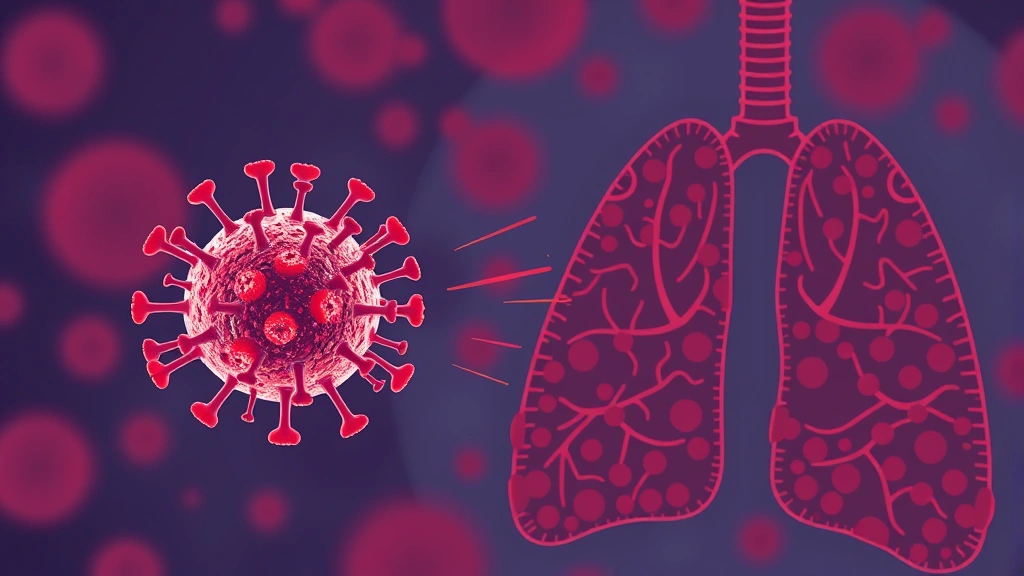
One of the deadliest features of severe COVID-19 is runaway lung inflammation — the immune system doing as much damage as the virus. Scientists have now identified a viral protein that helps orchestrate this self-destruction, and, encouragingly, an existing drug that might block it.
The culprit: ORF8
The protein is ORF8, made by SARS-CoV-2. Researchers found it turns the body’s own immune cells into accomplices of the virus. Specifically, ORF8 boosts macrophages — large immune cells that patrol tissues — to display more ACE2, the very receptor the coronavirus uses to enter cells. In effect, ORF8 makes immune cells more infectable. Once infected, those macrophages lose their antiviral function and undergo inflammatory cell death, spilling damaging signals into the lung.
A vicious cycle
The result is what the researchers call a “feedforward circuit” — a self-amplifying loop. Infected macrophages release inflammatory signals that make the surrounding lung epithelial cells more vulnerable to viral replication, which produces more virus and more ORF8, which infects and inflames more cells. Round and round, the loop amplifies tissue damage and scarring (fibrosis), helping explain why some COVID cases spiral into severe, lasting lung injury. “ORF8 is hijacking macrophages to enhance infection of the surrounding tissue,” explained first author Yusuke Matsui.
The unexpected treatment lead
Understanding the loop suggested a way to break it. The inflammatory signaling involved runs partly through a pathway called IL-17 — and there’s already an FDA-approved antibody that blocks its receptor: brodalumab, used for psoriasis. When researchers used IL-17RA blockade in mouse models, it lowered the viral burden and reduced lung inflammation and fibrosis. Repurposing an approved drug is attractive because its safety is already well characterized, potentially shortening the path to testing in patients. The work, from the Gladstone Institutes and UC San Francisco (senior author Melanie Ott), was published in Science Advances.
Why it matters
Beyond COVID specifically, the study is a window into a general problem: how viruses weaponize the immune system against its host. Identifying the exact molecular lever (ORF8 → macrophage ACE2 → inflammatory loop) creates a precise target, and finding an existing drug that hits a node in that loop is the kind of lead that can move relatively quickly. It could matter for future variants and, potentially, for other inflammatory lung conditions driven by similar circuits.
The caveats
This is mechanistic research in cells and mice, not a proven treatment. Mouse lungs are not human lungs, and many promising anti-inflammatory strategies for severe COVID have disappointed in trials. Brodalumab also carries its own safety considerations. The finding is a strong, actionable hypothesis — but it needs clinical testing before anyone knows whether blocking this pathway helps patients. Not medical advice.