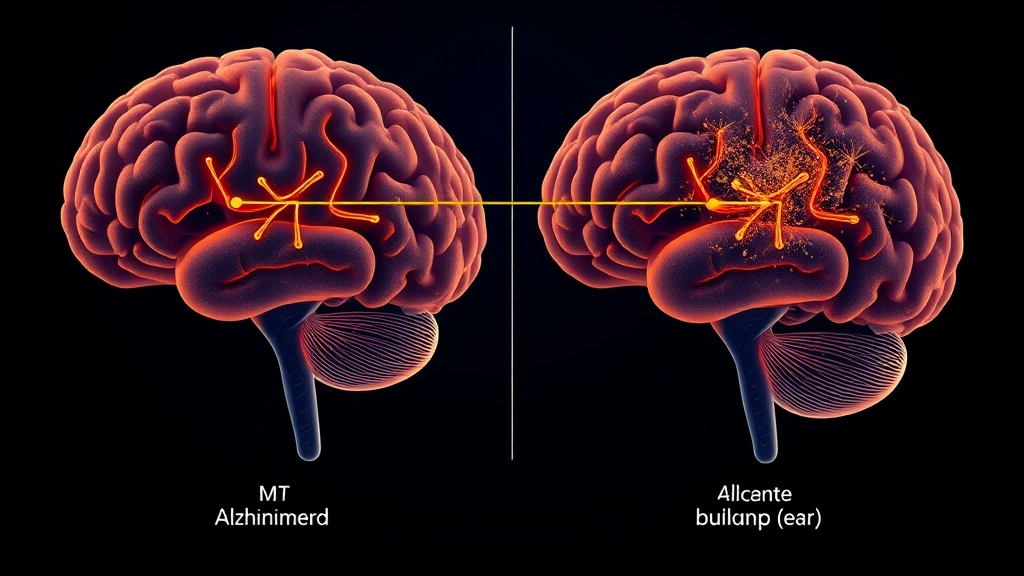
Alzheimer’s disease is defined, diagnostically and commercially, by amyloid plaques. Research from the University of Oslo suggests the brain begins changing structurally at least seven years before those plaques become detectable on a PET scan.
The study, published in Nature Neuroscience (DOI 10.1038/s41593-026-02363-4), was led by James Michael Roe, a postdoctoral researcher at the university’s Center for Lifespan Changes in Brain and Cognition (LCBC), directed by Anders Martin Fjell.
What makes this dataset unusual
The finding rests on something that cannot be manufactured quickly: repeated MRI brain scans collected over nearly 20 years in cognitively healthy older adults.
Most Alzheimer’s imaging research compares people who already have the disease with people who do not, at a single point in time. That design cannot separate cause from consequence, and it cannot see the beginning of anything. A cohort scanned repeatedly across two decades, before anyone knew who would go on to develop pathology, allows a different question: what was already happening in the people who would later turn out to have plaques?
The researchers used amyloid-PET imaging to determine who eventually accumulated detectable plaques, then looked backwards through the MRI record to compare those individuals against those who did not.
The finding
Structural changes in the cortex — the brain’s outer layer, where thinning is a well-established marker of neurodegeneration — appeared at least seven years before plaques showed up on PET.
“Structural changes in the brain occur many years before high levels of plaque are seen on PET scans,” Roe said, describing it as “the earliest signal detected on brain scans to date.”
Two explanations, and the researchers cannot yet choose
The first possibility is that amyloid-related processes are already at work before plaques are visible. PET imaging detects aggregated plaque above a threshold; it does not detect soluble amyloid oligomers, which many researchers consider the more toxic species. On this reading, the disease is doing damage during a long invisible phase, and PET simply arrives late to it.
The second is that separate, non-amyloid processes drive the early changes — vascular contributions, inflammation, or something else entirely — with plaques arriving later as a parallel or downstream feature rather than the initiating cause.
These are very different claims. The first says the amyloid model is right but the detection window is wrong. The second says the amyloid model may be incomplete at its foundation.
Why the distinction matters commercially and clinically
An enormous amount rides on which is true. The anti-amyloid antibodies that reached the market after decades of failure produce statistically real but clinically modest slowing of decline, and a common explanation for that gap is timing — that treatment begins after too much damage has accumulated.
If this study’s first explanation holds, it strengthens the case for intervening dramatically earlier, in people who would today be considered entirely healthy, and it suggests structural imaging might identify them. If the second holds, then removing amyloid may never fully address whatever begins the process, and earlier dosing of the same drug class would not solve it.
What this would change about diagnosis
There is a practical angle independent of the mechanistic debate. Amyloid-PET is expensive, requires a radiotracer and specialised facilities, and is not remotely deployable as a screening tool. MRI is comparatively cheap and widely available.
If a structural signature on MRI reliably preceded plaque accumulation by years, it could in principle serve as an early triage step — identifying who warrants more expensive investigation. That is a long way from a validated test, but it is the direction the finding points.
Where this line of work goes next
The obvious follow-up is to place the structural signal alongside the other markers that have matured in the past few years. Alzheimer’s research now has tau PET imaging, which tracks a pathology that correlates more closely with cognitive decline than amyloid does, and a generation of blood-based biomarkers that have made large-scale testing conceivable for the first time.
The question worth answering is whether cortical thinning precedes those markers too, or arrives alongside them. If structural change turns out to be the very first detectable event, it strengthens the argument that something upstream of both amyloid and tau initiates the process. If blood markers move earlier, the practical value of the MRI signal diminishes considerably, since a blood test is cheaper and easier than imaging at any scale.
The caveats
This is an observational study. It establishes a sequence, not a mechanism, and a sequence is not causation — cortical thinning preceding plaque detection does not establish that one leads to the other.
Cortical thinning is also not specific to Alzheimer’s. It occurs in normal ageing, in other neurodegenerative conditions, and in response to vascular disease. A signal that appears seven years early is only useful diagnostically if it can distinguish future Alzheimer’s pathology from ordinary age-related change at the level of an individual, and group-level differences rarely transfer cleanly to individual prediction.
There is also an inherent limitation in how the groups were defined. Participants were classified by whether plaques eventually became detectable on PET — a threshold effect. Some in the comparison group may have had subthreshold amyloid accumulation, which would blur the contrast.
Nothing here changes how Alzheimer’s is currently diagnosed or treated. What it does is add evidence that the disease’s beginning sits further back in time than the tools used to define it can currently reach. Research news, not medical advice.