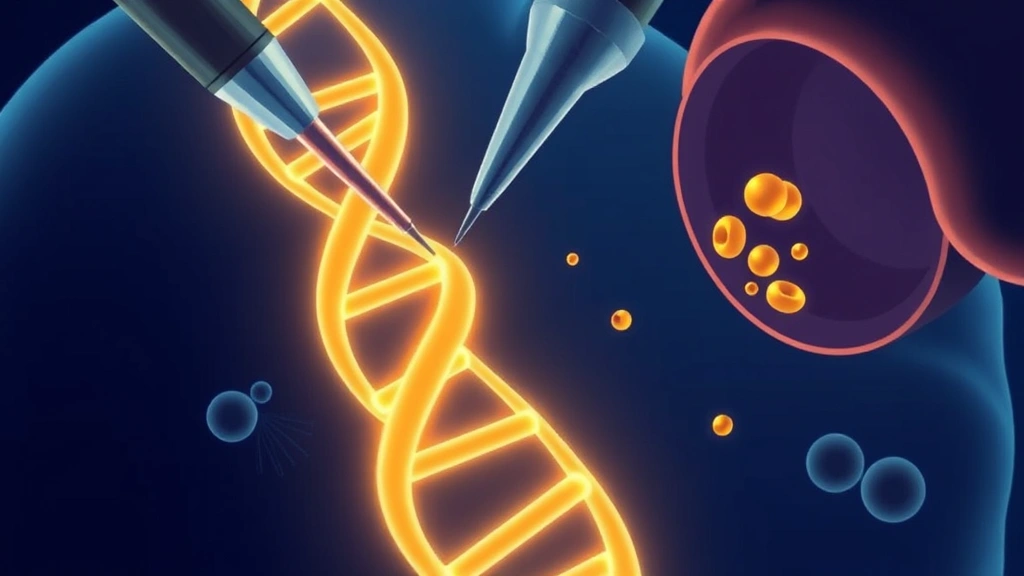
A single infusion of a CRISPR gene-editing treatment lowered “bad” LDL cholesterol by more than half and kept it there for a full year, according to one-year follow-up from a first-in-human trial of CTX310, from CRISPR Therapeutics. The results were published in the New England Journal of Medicine and presented on September 27, 2026 at the European Society of Cardiology’s annual congress.
The results
The Phase 1 trial enrolled 15 adults with hard-to-treat high cholesterol or triglycerides. At the highest dose tested (0.8 mg/kg), LDL cholesterol was 52.5% below baseline and triglycerides 47.8% lower twelve months after a single treatment. No serious adverse events related to the therapy were reported during the year of follow-up. Lead investigator Luke Laffin, a cardiologist at Cleveland Clinic, presented the data.
How it works
CTX310 is delivered by infusion inside lipid nanoparticles, tiny fat bubbles that are naturally taken up by the liver. Once inside liver cells, the CRISPR-Cas9 machinery cuts and disables the ANGPTL3 gene. ANGPTL3 makes a protein that puts the brakes on enzymes that clear fats from the blood. With less ANGPTL3, the body removes more LDL cholesterol and triglycerides from circulation. Because the edit is made to the DNA of liver cells, the effect is intended to be permanent — a one-time treatment rather than a daily pill or regular injection.
Why ANGPTL3 is a good target
The strongest evidence comes from nature. Some people are born with genetic variants that switch off ANGPTL3. They have unusually low LDL and triglycerides, a lower risk of heart disease, and no obvious health problems as a result. That “human knockout” evidence gives researchers confidence that permanently turning the gene down should be safe and beneficial. An antibody that blocks ANGPTL3, evinacumab, is already approved for a rare inherited form of very high cholesterol, which further validates the target.
Why a one-time treatment matters
High LDL cholesterol is one of the most important causes of heart attacks and strokes, and effective drugs already exist: statins, ezetimibe, and injectable PCSK9 inhibitors. The problem is that many people stop taking them. Studies consistently find that a large share of patients prescribed statins are no longer taking them within a year or two. A treatment that works after a single dose would remove adherence from the equation, which is why several companies are racing to develop gene-editing treatments for cholesterol. Lilly, for instance, acquired Verve Therapeutics, which is developing base-editing treatments aimed at another cholesterol gene, PCSK9.
What the one-year data add
Earlier results from this trial showed that CTX310 could lower cholesterol within weeks. The open question was durability: would a single treatment keep working, or would the effect fade as liver cells turned over? The one-year data are the first real answer. LDL and triglycerides stayed roughly halved twelve months on, consistent with a permanent edit rather than a temporary drug effect. That durability is the whole premise of a one-and-done treatment, so this is the result investors and cardiologists were watching for.
How it compares with other gene-editing approaches
CTX310 uses classic CRISPR-Cas9, which cuts the DNA to disable a gene. Verve’s programs use base editing, which changes a single DNA letter without a full cut, and have mostly targeted PCSK9, the same gene targeted by injectable cholesterol drugs. The field has had setbacks: Verve paused its first PCSK9 program in 2024 after lab abnormalities in one patient, blamed on the delivery particle, and moved to a new formulation. Each approach will ultimately be judged on the same questions: how much cholesterol falls, how long the effect lasts, and how clean the long-term safety record is.
Lowering triglycerides too
Most cholesterol drugs mainly lower LDL. CTX310 also cut triglycerides by nearly half, a second type of blood fat linked to heart disease and, at very high levels, to pancreatitis. That dual effect could make it particularly useful for people with mixed lipid disorders who have both high LDL and high triglycerides, a group that current drugs serve less well.
The caveats
This is a very small, early trial: 15 people, designed mainly to test safety and find the right dose. It did not measure heart attacks or strokes, and a much larger study would be needed to show that lower LDL from gene editing prevents cardiovascular events, as it does with drugs. A permanent edit also means any unforeseen long-term effect could not be reversed. In line with FDA guidance for gene-editing therapies, participants will be monitored for an additional 15 years.
What comes next
The researchers plan to test CTX310 in larger groups of patients, likely starting with people whose cholesterol or triglycerides remain high despite existing treatment. If the effect keeps holding and safety stays clean, one-time gene editing could eventually become an option alongside daily statins. That future is still years away. For now, the drugs that lower cholesterol are proven, and they work when taken. This is research news, not medical advice.