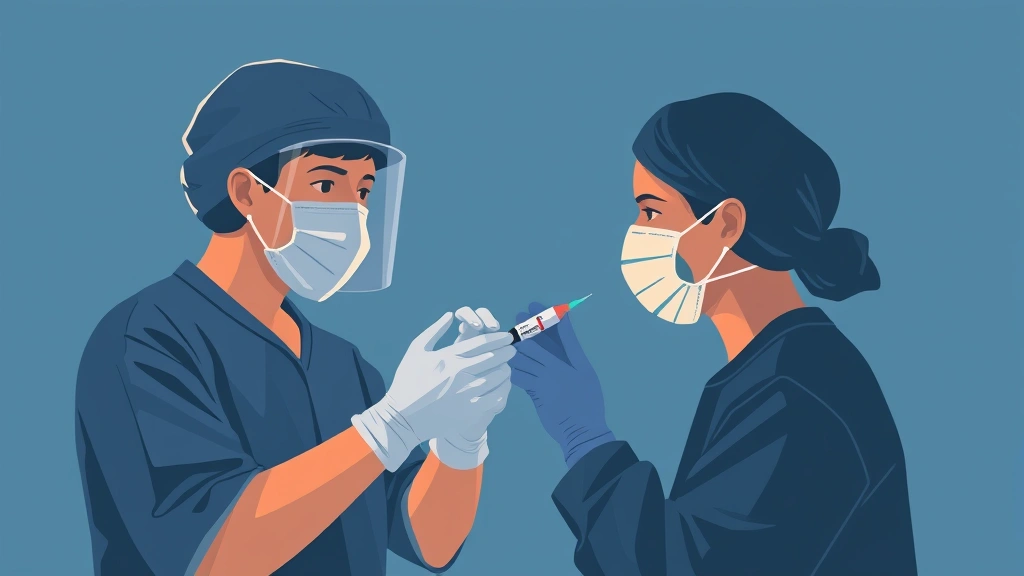
The Democratic Republic of Congo has begun vaccinating health workers against Ebola at the center of what is now the largest and fastest-spreading Ebola outbreak on record — a grim escalation that has killed more than 3,000 people since it began earlier in 2026.
The scale of the crisis
The outbreak, which spread across parts of the DRC, has grown faster than any previous Ebola epidemic. Health workers are especially exposed — they treat the sick, handle bodily fluids, and are deeply embedded in the response — which is exactly why they are being prioritized for vaccination. The campaign began in Bunia, in the outbreak’s epicenter.
An imperfect but valuable tool
The vaccine being used is Ervebo, which proved highly effective in past Ebola outbreaks — but with an important caveat: those outbreaks were caused by a different, more common species (Zaire ebolavirus), the one Ervebo was designed against. Because there is no vaccine specifically approved for the strain driving this outbreak, Ervebo is being deployed under a compassionate-use programme — a mechanism that allows an unapproved use of a medical product in a serious, life-threatening situation. The WHO approved 70,000 doses for use in the DRC.
This connects to a broader gap in outbreak preparedness: the world has strong tools against the most famous Ebola strain, but far weaker defenses against its relatives — which is precisely why less-common filoviruses can flare into large, deadly outbreaks.
Testing whether it works
Because Ervebo is being used against a strain it wasn’t built for, its real-world effectiveness here is a genuine open question — and one researchers are now studying. On September 19, 2026, Doctors Without Borders (MSF) and its epidemiological research center launched a study to evaluate Ervebo’s effectiveness among frontline health workers, following 20,000 frontline workers in Ituri and North Kivu provinces over nine to 12 months. The results could inform how to protect responders in future outbreaks of less-common Ebola strains.
Why it matters
Vaccinating health workers is both humane and strategic: protecting responders keeps the health system functioning and slows transmission, since infected caregivers can unknowingly seed new cases. But the situation underscores a hard truth — preparedness cannot be limited to the best-known pathogens. Strong, strain-specific vaccines, rapid diagnostics and local lab capacity are what contain outbreaks before they reach this scale. Deploying an existing vaccine compassionately is a stopgap born of necessity, not a substitute for the tools this outbreak revealed are missing. This summarizes public-health reporting and is not medical advice.