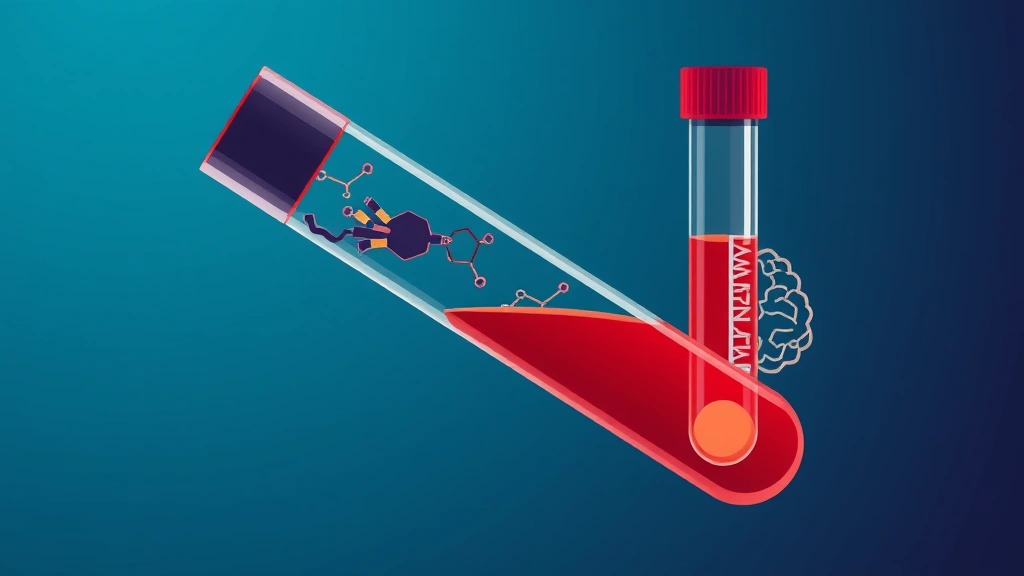
The FDA has cleared PrecivityAD2, a blood test from C2N Diagnostics that helps detect the biology of Alzheimer’s disease, authorised for adults with cognitive symptoms as young as 40.
Cleared on August 20, 2026, the test uses high-resolution mass spectrometry to measure specific beta-amyloid and tau protein fragments in blood, reporting an Aβ42/40 ratio and a %p-tau217 value combined into an amyloid probability score.
Why blood testing was so hard
The proteins characterising Alzheimer’s accumulate in the brain, and only minute quantities reach the bloodstream — where they sit among vastly more abundant proteins.
Detecting them requires distinguishing tiny concentration differences of specific protein fragments against that background, reproducibly, across laboratories. That is why blood-based Alzheimer’s testing was long considered impractical despite obvious demand, and why the analytical method matters: high-resolution mass spectrometry measures molecules by mass with the precision needed to separate closely related fragments.
What the two markers indicate
The Aβ42/40 ratio works on a counterintuitive principle. As amyloid deposits in the brain, the Aβ42 form is preferentially sequestered into plaques, so less of it circulates. A falling ratio therefore signals accumulation — the blood level drops because the protein has gone somewhere.
p-tau217 is a phosphorylated form of tau that has emerged as the strongest blood marker of Alzheimer’s pathology, tracking closely with amyloid status and rising early in the disease process.
Combining them into a single probability score is sensible, since each captures a related but distinct aspect of the pathology and together they perform better than either alone.
What it replaces
Until recently, confirming Alzheimer’s biology required a PET scan or a spinal tap.
Amyloid PET is accurate and expensive, requires a radiotracer and specialised imaging, and is available only at centres equipped for it. Lumbar puncture is cheaper and highly accurate and is invasive, uncomfortable and something many patients decline.
The practical consequence was that most people diagnosed with Alzheimer’s never had the biology confirmed at all. Diagnosis rested on clinical assessment, which is reasonably accurate in expert hands and misclassifies a meaningful proportion — other conditions cause similar symptoms, and Alzheimer’s frequently coexists with them.
Why 40 is the notable number
Clearance for symptomatic adults from age 40 addresses a specific and difficult group.
Young-onset dementia is uncommon and frequently misdiagnosed, sometimes for years. Cognitive symptoms in a 45-year-old are readily attributed to depression, stress, burnout or the menopause, and clinicians are reasonably reluctant to raise dementia in someone that age without strong grounds.
A blood test available in that population could shorten diagnostic journeys that have historically been long and distressing — in either direction, since ruling Alzheimer’s pathology out is as valuable as confirming it when the alternative diagnoses include treatable conditions.
The field is moving quickly
PrecivityAD2 joins a rapidly growing category. The first US blood test to aid Alzheimer’s diagnosis was cleared in 2025, and assays from Roche, C2N, Quanterix and ALZpath are now cleared, under review, or available through specialised laboratories.
That pace reflects a genuine scientific shift. Blood markers went from unreliable to clinically credible within a few years, largely through improved analytical methods and the identification of p-tau217 as an unusually informative target.
Why the timing matters
Accurate, less-invasive testing matters more now that amyloid-targeting therapies are available and work best early.
Those treatments require confirmed amyloid pathology before starting — they act on amyloid, and giving them to someone whose symptoms have another cause exposes them to real risks including brain swelling and bleeding for no possible benefit. Before blood testing, that confirmation requirement was itself a barrier to access.
The limits, which are important
These tests are meant to aid diagnosis in people who already have symptoms, not to screen healthy people.
That distinction is easy to lose and consequential. Amyloid accumulates in many older adults who never develop dementia, so a positive result in someone without symptoms indicates pathology present rather than disease certain to come. Screening the asymptomatic would generate anxiety and diagnostic cascades without a corresponding intervention.
What blood testing changes about who gets diagnosed
The practical consequence of moving from PET and lumbar puncture to a blood draw is about access rather than accuracy.
Amyloid PET requires a scanner, a radiotracer with a short half-life produced nearby, and a specialist to interpret it. Those exist at academic centres and large hospitals, which means confirmation has been available to patients who reach a memory clinic in a well-resourced area and largely unavailable to everyone else.
A blood test can be drawn in primary care and sent to a laboratory. That extends confirmation to rural populations, to health systems without imaging infrastructure, and to patients who would never be referred for a specialist workup.
It also creates a new problem. Primary care clinicians will receive results reporting amyloid probability in patients with cognitive complaints, and interpreting them correctly requires understanding that pathology present does not equal disease explained. Making a test widely available without the interpretive support to accompany it is a recognised way to generate both false reassurance and unnecessary alarm.
Results are also interpreted by clinicians alongside other information. The test reports a probability, not a diagnosis, and Alzheimer’s pathology being present does not exclude other contributors to a patient’s symptoms. Regulatory news, not medical advice.