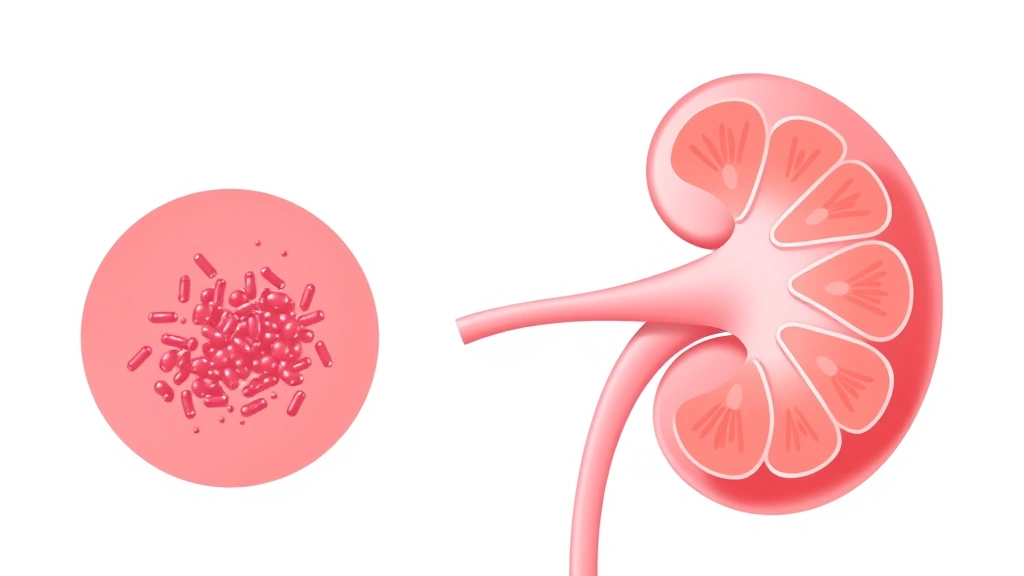
IgA nephropathy (IgAN), also called Berger’s disease, is the most common form of primary glomerulonephritis in the world — inflammation of the kidney’s tiny filters that starts in the kidney itself rather than as a side effect of another disease. It often strikes people in their 20s, 30s and 40s, frequently causes no symptoms for years, and until recently had no treatments aimed at its cause. That has changed quickly. This guide explains the disease in plain language and how today’s treatment options fit together.
What happens in the kidneys
Each kidney contains around a million filtering units called glomeruli. In IgAN, clumps of an antibody called immunoglobulin A (IgA) get stuck in the glomeruli. The deposits trigger inflammation, and the complement system — a part of the immune system that amplifies attacks — joins in. Over years, the inflammation can scar the filters. Scarred filters stop working, and when enough are lost, the kidneys fail.
What causes it
Scientists describe IgAN as a “multi-hit” disease. First, the body makes a malformed version of IgA1 that is missing some of its normal sugar groups, known as galactose-deficient IgA1; much of it appears to originate in the immune tissue that lines the gut and airways. Second, the immune system makes antibodies against that malformed IgA. Third, the two bind into immune complexes that circulate and lodge in the kidney. Fourth, those deposits spark inflammation and complement activation. Genes play a role — the disease is more common in people of East Asian ancestry and sometimes runs in families — but it is not contagious, and there is no known way to prevent it.
Symptoms to know
Many people have no symptoms, and the disease is found by chance when a routine urine test shows blood or protein. When symptoms do appear, the classic sign is cola- or tea-colored urine during or a day or two after a cold, sore throat or other infection — the immune response to the infection drives a burst of IgA. Other signs include foamy urine (from protein), swelling in the ankles or around the eyes, and high blood pressure. Later, as kidney function falls, tiredness, nausea and itching can develop. None of these symptoms is specific to IgAN, which is why testing matters.
How it is diagnosed
Doctors usually start with a urine test to measure protein (often reported as a urine protein-to-creatinine ratio) and look for blood, and a blood test for creatinine, which is used to calculate eGFR, the estimate of kidney filtering capacity. The only way to confirm IgAN is a kidney biopsy: a small sample of tissue, taken with a needle, is stained to reveal the IgA deposits. Pathologists also grade the amount of inflammation and scarring, which helps predict how the disease is likely to behave.
How serious is it?
IgAN varies widely. Some people have mild disease that stays stable for decades; others lose kidney function steadily. Historically, a substantial minority of patients reached kidney failure within 20 years of diagnosis. More recent registry data from the UK suggest the disease is more dangerous than once assumed: even people with fairly modest protein leakage face a meaningful lifetime risk of kidney failure, especially because many are diagnosed young. The strongest warning sign is persistent proteinuria, which is why protein in the urine has become the main treatment target.
The treatment goal: bring protein down
International kidney guidelines (KDIGO, updated in 2025) now set an ambitious target: get urine protein below 0.5 grams per day, and ideally below 0.3. The guidelines also frame treatment in two parts — protecting the kidneys from the general effects of chronic kidney disease, and treating the immune process that is causing IgAN in the first place.
Foundational care
Nearly everyone with IgAN and proteinuria is advised to control blood pressure and take a drug that blocks the renin-angiotensin system — an ACE inhibitor or ARB — which lowers pressure inside the glomeruli and reduces protein leakage. SGLT2 inhibitors, originally diabetes drugs, are increasingly added because they slow kidney-function decline in chronic kidney disease. Lifestyle steps help too: less salt, not smoking, and staying at a healthy weight.
The new generation of drugs
Since late 2023, the FDA has approved a series of therapies that act on different steps of the disease:
- Tarpeyo (targeted-release budesonide) — a steroid designed to release in the lower small intestine, where it is thought to reduce production of the malformed IgA, with less exposure to the rest of the body than standard steroids.
- Filspari (sparsentan) and Vanrafia (atrasentan) — drugs that block endothelin, a signal that constricts blood vessels and promotes scarring in the kidney. Filspari also blocks angiotensin, so it replaces an ACE inhibitor or ARB.
- Fabhalta (iptacopan) — an oral drug that blocks complement factor B, calming the complement amplification. Because blocking complement raises the risk of certain serious infections, patients need vaccinations first.
- Voyxact (sibeprenlimab) and Trutakna (atacicept) — injectable drugs that block APRIL (and, for Trutakna, also BAFF), signals that immune B cells need to produce the malformed IgA. They act at the very start of the disease chain.
Several of these approvals were accelerated approvals based on proteinuria reduction, with longer studies required to confirm kidney-function benefit. Specialists increasingly expect to combine drugs that act at different steps — for example, an agent that reduces faulty IgA production alongside one that protects the kidney.
What is coming next
The pipeline is still full. Vertex’s povetacicept, a monthly injection that blocks both APRIL and BAFF, has an FDA decision expected by the end of November 2026. Roche’s sefaxersen, a once-monthly antisense drug that lowers factor B production, recently reported positive Phase 3 results. The open questions are which combinations work best, who needs the newer drugs early, and how these expensive therapies will be paid for.
Living with IgAN
For people who do reach kidney failure, dialysis and kidney transplant are the options; IgA deposits can return in a transplanted kidney, although this does not always cause problems. For most patients, though, the practical message is more hopeful than it was even five years ago: regular urine and blood monitoring, a nephrologist who follows current guidelines, and a growing set of targeted treatments give a real chance of protecting kidney function for the long term. This explainer is general information, not medical advice; decisions about testing and treatment belong with a kidney specialist.