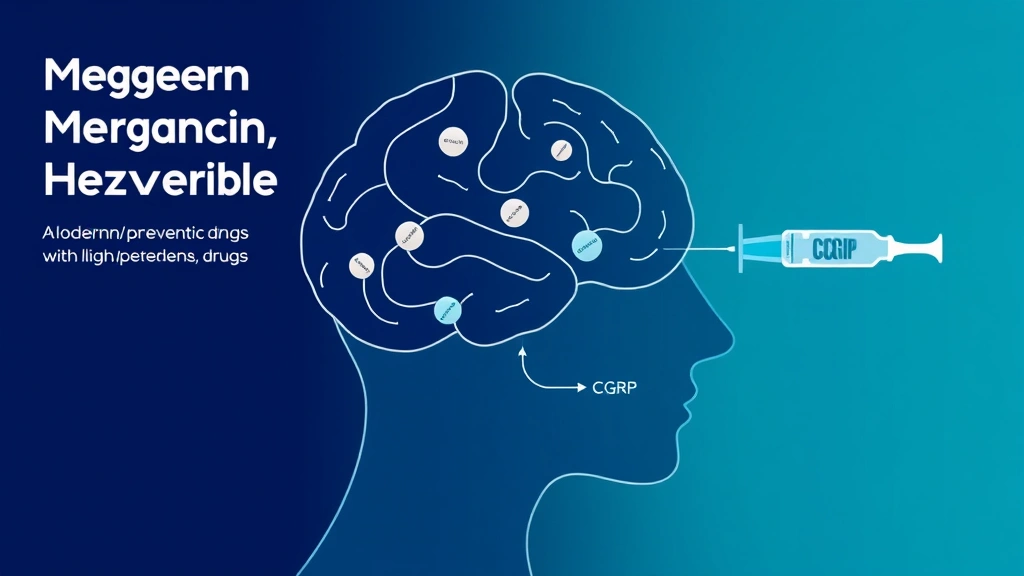
For the first time since 2012, the American Headache Society and the American Academy of Neurology have updated their guidelines for preventing migraine — catching up with a wave of medicines that transformed the field.
Why a fourteen-year gap matters
The 2012 guidance predates essentially every drug developed specifically for migraine. At that time, prevention meant repurposing medicines designed for other conditions — blood pressure drugs, anti-seizure drugs, antidepressants — that happened to reduce migraine frequency, with side effect profiles reflecting their original purpose.
At least six new FDA-approved migraine drugs have arrived since. Guidelines had therefore been silent on the entire modern armamentarium, which matters because guidelines shape prescribing and coverage decisions well beyond individual clinical judgement.
What CGRP drugs are
The update gives high marks to CGRP-targeting therapies: atogepant (Qulipta), eptinezumab (Vyepti), erenumab (Aimovig), fremanezumab (Ajovy) and galcanezumab (Emgality).
Calcitonin gene-related peptide is a signalling molecule released during migraine attacks that dilates blood vessels and transmits pain signals. Blocking it — either the peptide itself or its receptor — is the first prevention strategy built from an understanding of migraine biology rather than discovered by observing that a drug for something else helped.
The practical difference is tolerability. Because these drugs act on a migraine-specific pathway, they avoid much of the sedation, cognitive dulling, weight change and blood-pressure effects that led many patients to abandon older preventives.
The older drugs remain
Longtime standbys with more safety history are still recommended: Botox for chronic migraine, propranolol for episodic migraine, and the anti-seizure drug topiramate.
That is a sensible position rather than a hedge. These drugs work, they are inexpensive, and decades of use mean their long-term risks are genuinely understood — which cannot yet be said of drugs available for a few years. For many patients an older preventive remains a reasonable first choice, particularly given cost.
Who should consider prevention
The guidelines suggest preventive treatment for people with at least four migraine or severe-headache days a month, or whose migraines interfere with work or daily life.
The second criterion is the more important one. Frequency alone is a poor measure of burden: someone with two severely disabling attacks a month may be worse affected than someone with six mild ones. Building functional impact into the threshold acknowledges that.
Migraine affects an estimated 15% of Americans and disproportionately women. It is consistently ranked among the leading causes of years lived with disability worldwide, and is nonetheless routinely underestimated — partly because attacks are invisible, and partly because sufferers learn to conceal them.
Why guidelines change access
“There has been a wealth of new treatment available,” said co-author Rebecca Burch.
Guidelines determine more than prescribing habits. Insurers reference them when setting coverage policy, and CGRP therapies are expensive relative to generic alternatives — which is why many plans require patients to fail two or more older drugs before approving one.
Formally elevating these therapies in guidelines strengthens the case against such step-therapy requirements. For patients who cannot tolerate topiramate or propranolol, being obliged to try them anyway means months of side effects before reaching something that might work.
The candesartan problem
One detail deserves attention because it illustrates a structural bias in evidence-based medicine.
Candesartan, a cheap generic blood-pressure drug with supportive evidence for migraine prevention, received an “insufficient evidence” rating.
This does not mean candesartan does not work. It means the trials supporting it are smaller and older than the large, rigorous, industry-funded programmes behind the CGRP drugs. Nobody funds definitive trials of an off-patent generic, because there is no commercial return in doing so.
Guideline ratings measure the quality and quantity of available evidence, and evidence gets generated where there is money to generate it. The result is a systematic tilt toward newer, patented drugs — not through bias in the guideline process, but because of what gets studied. For patients paying out of pocket, an inexpensive generic with reasonable evidence may be a better practical option than its rating implies.
How to use this
Prevention and treatment are different problems
One distinction the guidelines assume but patients frequently do not is worth stating, because confusing the two is a common source of poor outcomes.
Acute treatment is taken during an attack to stop it — triptans, anti-inflammatories, and newer agents developed for the purpose. Prevention is taken continuously, whether or not an attack is occurring, to reduce how often attacks happen at all. They are separate categories, and someone can need both.
The failure mode is real: patients with frequent attacks who rely entirely on acute medication can develop medication-overuse headache, in which the treatment itself begins driving the headaches, producing a cycle that is difficult to break and requires withdrawal to resolve. Frequent use of acute treatment is therefore itself an indication to consider prevention — part of why the guidelines set a threshold at four headache days a month, and why prevention being underused is a clinical problem rather than a missed opportunity.
The update is a genuine improvement: prevention is underused in migraine, many patients who qualify have never been offered it, and clearer guidance helps. Its most useful function may simply be prompting the conversation about whether prevention is warranted at all. Informational only; discuss migraine prevention with your clinician.