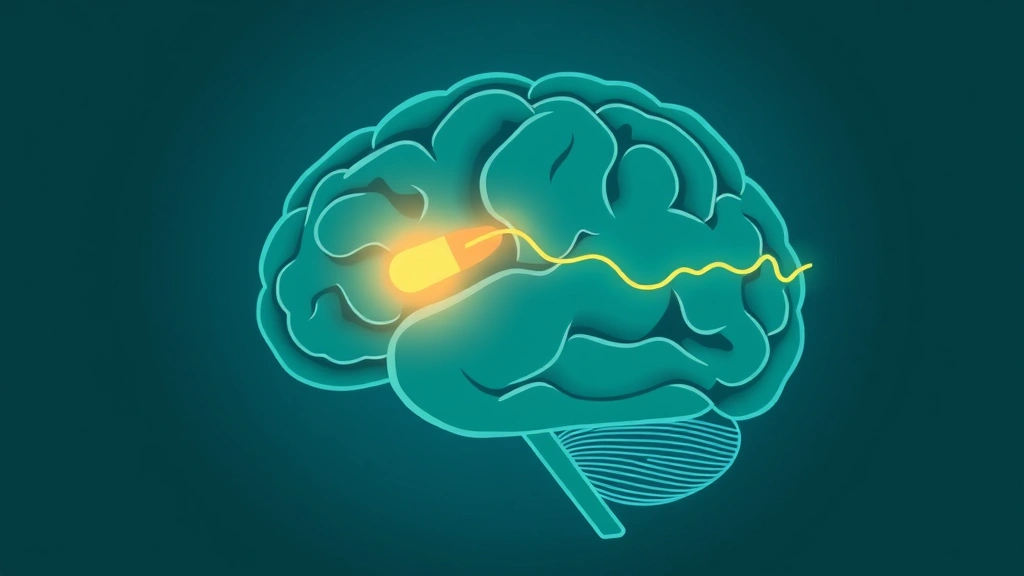
The new wave of oral weight-loss drugs may work on more than hunger. A study suggests they also quiet the brain circuit behind eating for pleasure — the cravings that push people toward a dessert they do not need.
Researchers at the University of Virginia, reporting in Nature, studied orforglipron (a recently approved oral GLP-1 medication) and danuglipron (an experimental one).
In mice engineered with human-like GLP-1 receptors, the drugs activated a brain region called the central amygdala and reduced dopamine release in the reward system during pleasure-driven eating.
Hunger versus craving
Crucially, this appears to be a separate pathway from the appetite-control effect GLP-1 drugs are already known for.
The distinction is real and well established in neuroscience. Homeostatic eating is driven by energy need: signals reporting depleted stores reach the hypothalamus, which generates hunger and drives food-seeking until the deficit is corrected.
Hedonic eating is driven by the reward value of food itself, and it operates independently of energy status — which is why a person who has just finished a large meal can still want dessert. Nothing about their energy balance calls for it.
Most overeating in an environment of abundant, palatable, calorie-dense food is hedonic rather than homeostatic. A drug acting only on hunger addresses the smaller part of the problem.
Why the amygdala finding is interesting
The central amygdala is not the region most associated with appetite. It is involved in emotional processing, fear and aversion, and in assigning emotional significance to stimuli.
Its activation during suppression of pleasure-driven eating suggests the drugs are doing something more than reducing reward — possibly shifting how food is evaluated emotionally rather than only how rewarding it feels.
The reported nausea and food aversion that accompany this drug class may be related. A region involved in aversion being activated is at least consistent with patients describing not merely reduced appetite but reduced interest in, and sometimes distaste for, foods they previously sought.
Why the mouse model matters here
The engineering detail — mice with human-like GLP-1 receptors — is not incidental.
Orforglipron and danuglipron are small molecules rather than peptides, and small molecules bind receptors in a more shape-dependent way than peptides do. A small molecule designed against the human receptor may bind the mouse version poorly or not at all.
Humanising the receptor is what makes the experiment meaningful. Without it, testing these compounds in ordinary mice would say little about what they do in people.
Why it matters
“We’ve known that GLP-1 drugs suppress feeding behaviour driven by energy demand. Now it seems oral small-molecule GLP-1s also dial back eating for pleasure,” said Ali Guler, PhD, of the University of Virginia.
If oral pills can blunt reward-driven eating, that helps explain their power — and points toward drugs targeting cravings specifically.
It also connects to the broader finding that these drugs affect reward processing generally, including reported reductions in alcohol consumption and other compulsive behaviours. A common mechanism would explain effects that otherwise look unrelated.
The caveats
The authors are explicit that this was not a clinical trial: it was done in mice and has not been assessed by the FDA for this effect.
Findings in animal brains do not always translate. Reward circuitry is broadly conserved, which helps, and what constitutes pleasure-driven eating in a mouse is inferred from behaviour rather than reported — a genuine interpretive gap when the subject is subjective experience.
Why the oral small-molecule distinction matters
The study specifically concerns small-molecule oral drugs rather than the injectable peptides, and that difference could bear on the brain effects observed.
Peptide GLP-1 drugs are large and cross the blood-brain barrier poorly. Their central effects are thought to occur largely through regions where the barrier is incomplete — circumventricular organs positioned to sample the bloodstream — and through signals relayed from the periphery via the vagus nerve.
Small molecules are a different proposition. Depending on their chemistry they may penetrate the brain more freely, reaching regions peptides cannot and acting directly on circuits that peptides influence only indirectly.
If that is what is happening, oral and injectable GLP-1 drugs are not simply the same mechanism in different packaging. They could differ in which central effects they produce, in how strongly, and in their side-effect profile — since a drug reaching more of the brain reaches regions governing nausea and aversion too.
Whether that turns out to be an advantage or a liability is genuinely open, and it is a question the clinical programmes rather than mouse studies will settle.
General information, not medical advice.