The FDA has granted accelerated approval to Genglycos (pariglasgene brecaparvovec-opnr, formerly DTX401), from Ultragenyx — the first therapy targeting the root cause of glycogen storage disease type Ia (GSDIa).
What GSDIa does
The liver has a job most people never think about: maintaining blood glucose between meals. It stores glucose as glycogen and releases it as needed, which is why blood sugar stays stable overnight rather than falling steadily.
In GSDIa, an enzyme deficiency prevents the liver from releasing glucose. The glycogen is there and cannot be mobilised, so patients face constant risk of dangerously low blood sugar — severe hypoglycaemia causing seizures, brain injury and death.
The management that defines these patients’ lives
Treatment is grueling: continuous monitoring and frequent doses of raw cornstarch, day and night, to keep glucose stable.
Raw cornstarch works because it digests slowly, releasing glucose gradually over several hours — a crude but effective substitute for a liver that cannot release its own. It must be taken every few hours including overnight, which means setting alarms through the night for the patient’s entire life, or continuous feeding through a tube.
The consequences of a missed dose are not theoretical. Families of children with GSDIa organise their lives around a schedule that never stops, and the exhaustion and anxiety of that regimen are part of the disease burden in a way that rarely appears in clinical descriptions.
How the therapy works
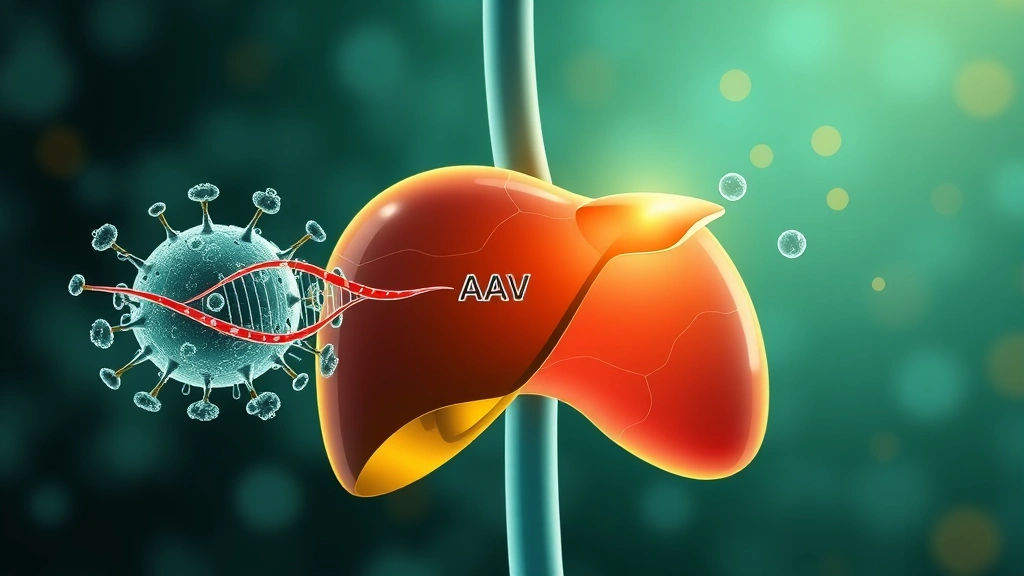
Genglycos uses an AAV8 viral vector to deliver a functional gene to liver cells, addressing the underlying defect rather than its symptoms.
The liver is the most tractable target in gene therapy, which is why so many programmes aim there. Blood from the gut passes through it, AAV8 has natural liver tropism, and hepatocytes are numerous and metabolically active. A disease caused by a single missing liver enzyme is therefore close to a best case for the technology.
The endpoint, and why it is the right one
Approval rests on a 48-week Phase 3 trial (GlucoGene) in 46 participants, showing a statistically significant reduction in the amount of cornstarch patients needed.
That endpoint deserves appreciation. It would have been easy to measure a laboratory value — enzyme activity, glucose stability — and easier still to defend scientifically. Instead the trial measured the thing patients actually experience: how much of the regimen dominating their lives they could stop.
It also functions as a genuine test of efficacy. Cornstarch requirement is determined by how much glucose the liver can release on its own, so needing less means the therapy is working — a functional readout dressed as a practical one.
The therapy is approved for adults and children aged 8 and older. “The approval of Genglycos fulfills our commitment to provide the first therapy that directly targets the root cause of GSDIa,” said Ultragenyx chief medical officer Dr Eric Crombez.
What accelerated approval means here
Accelerated approval lets a therapy reach patients based on a measure reasonably likely to predict benefit, with confirmation to follow.
Ultragenyx will track two years of safety and efficacy data from a commercial group of about 50 patients plus 20 controls, monitored for up to a decade.
Ten years of follow-up is standard for a one-time gene therapy and reflects the specific uncertainties. Durability is the first: AAV genetic material does not integrate into the genome, so as liver cells divide and are replaced, the therapeutic gene is diluted — a particular concern in children whose livers are still growing, and part of why the approval starts at age 8.
Long-term safety is the second, and gene therapy’s recent history — including findings emerging years after treatment in other programmes — explains why regulators want a decade rather than a couple of years.
The realistic picture
A reduction in cornstarch requirement is not the same as a cure. Patients will remain under metabolic care, and how much of the regimen can safely be relinquished will vary between individuals.
What comes after the cornstarch
Reducing the immediate metabolic burden addresses the most visible problem in GSDIa, and the disease has longer-term features the trial endpoint does not capture.
Patients accumulate complications over decades even with good glucose control: enlarged livers with a raised risk of benign tumours that can occasionally become malignant, progressive kidney disease, gout from disturbed uric acid handling, and growth impairment in childhood.
Whether restoring some enzyme function slows those complications is the question the ten-year follow-up may eventually answer, and it is a different question from whether patients need less cornstarch this year. A therapy that reduces the daily burden without changing the long-term trajectory would still be worth having; one that does both would be transformative.
That distinction also explains why the follow-up commitment extends so far. The endpoints that would demonstrate disease modification unfold over the timescale on which the disease itself does damage, which no 48-week trial can reach.
But for a condition where the treatment is a schedule that never sleeps, reducing rather than eliminating that burden is still a substantial change — and it is the first therapy to address why the burden exists at all. Regulatory news, not medical advice.