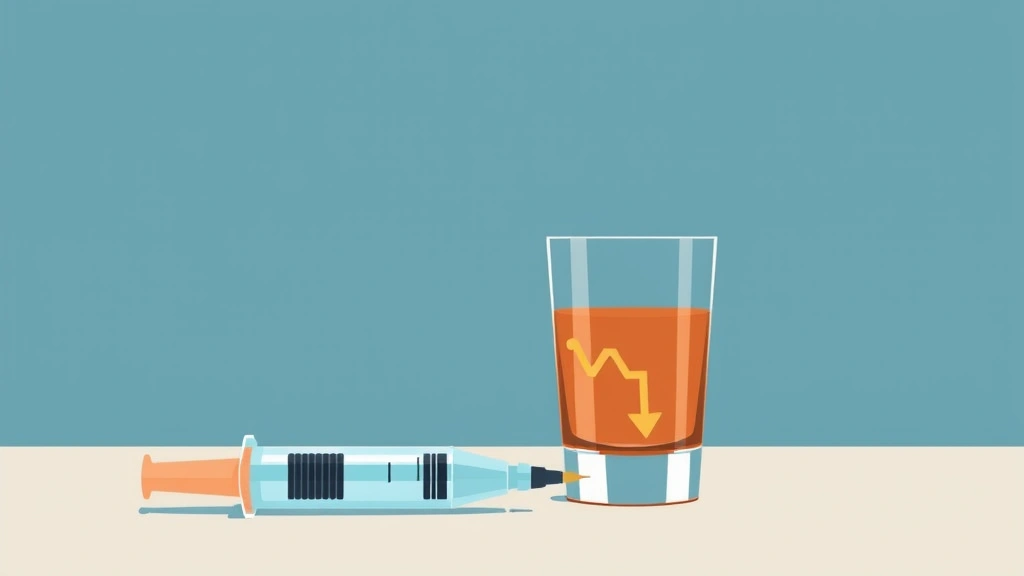
The GLP-1 drug class keeps revealing surprises. A Phase 2 trial suggests Altimmune's pemvidutide can reduce heavy drinking in people with alcohol use disorder — adding to mounting interest in whether these medicines can blunt cravings beyond food.
What the trial showed
The placebo-controlled study enrolled 100 participants with alcohol use disorder and obesity. At 24 weeks, the pemvidutide group cut their heavy-drinking days by an average of 4.2 days per week, versus 2.75 days for placebo. Notably, 42.2% of those on the drug reached zero heavy-drinking days, compared with under 21% on placebo.
How it works
Pemvidutide is a once-weekly injectable that activates both the GLP-1 and glucagon receptors — the GLP-1 arm curbing appetite and the glucagon arm targeting liver fat. Its effect on drinking fits a growing pattern: GLP-1-class drugs appear to influence the brain's reward circuitry, not just hunger.
The data show “strong and consistent efficacy across important measures,” said Altimmune chief medical officer Christophe Arbet-Engels.
Why it matters — and the caveats
Effective medications for alcohol use disorder are scarce, so any new option is significant. But this is a mid-stage trial, and it isn't all clean: one serious case of low blood sodium in the drug group was deemed possibly related. Altimmune plans to discuss a path forward with the FDA. This is early-stage research, not an approved treatment or medical advice.