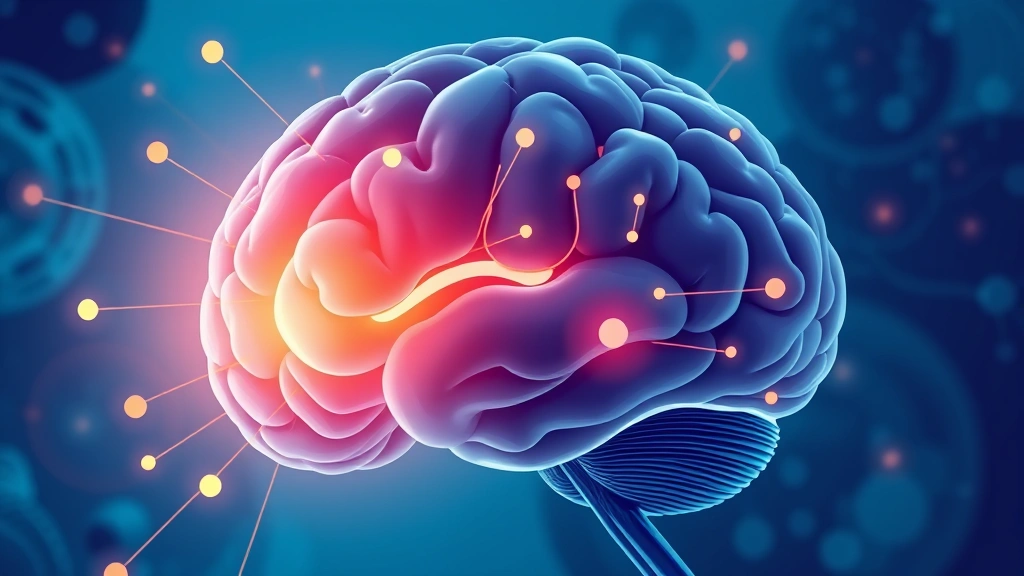
GLP-1 drugs are known for curbing appetite — and a growing body of research suggests they also quiet cravings for things like alcohol and nicotine. Scientists are zeroing in on where in the brain that happens.
Writing about the science, University of Otago researcher Robert Munn highlights the lateral septum, a region packed with GLP-1 receptors acting as a control point “between thinking about a reward and feeling compelled to pursue it.”
What the lateral septum does
The description of its function is precise and worth unpacking, because the distinction it draws is the interesting part.
The region takes in information from the hippocampus about where and when you are, and adds context about what is good in this place before signalling dopamine-producing reward centres.
That positions it as a contextual gate rather than a reward centre itself. Knowing that alcohol exists and is pleasurable is one thing; being in a bar on a Friday evening and feeling the pull is another. The lateral septum appears to sit at exactly that junction — translating knowledge of a reward into motivation to pursue it, weighted by circumstance.
Cue-triggered craving is a defining feature of addiction. People relapse in the places, at the times and around the people associated with use, and a circuit combining spatial and temporal context with reward valuation is a plausible substrate for that.
The evidence in humans
Human studies have found GLP-1 medicines reduce alcohol consumption, which is the strongest strand of evidence here.
The observation initially emerged anecdotally, from people taking these drugs for diabetes or weight loss reporting they had lost interest in drinking. That kind of report is easy to dismiss and became harder to ignore as it recurred, and formal studies have since supported it.
The animal evidence is broader
Preclinical work shows lower use of cocaine, amphetamines, opioids and nicotine, and activating GLP-1 signalling directly in the lateral septum reduces food intake in mice, with similar effects on alcohol.
The breadth across pharmacologically unrelated substances is what makes the shared-circuit hypothesis attractive. Cocaine, opioids and nicotine act on entirely different receptors, so a drug reducing use of all of them is unlikely to be interacting with each mechanism individually — it is more likely acting on something they converge on.
Direct injection into the lateral septum is the more compelling experiment, because it establishes that the region is sufficient rather than merely correlated. A systemically administered drug reaches every GLP-1 receptor in the body; activating the receptor in one region and observing the effect localises it.
Why this would matter for addiction treatment
If GLP-1 drugs work partly by turning down a general craving circuit, that could open approaches to treating addiction rather than only obesity.
Addiction pharmacology is thin. Alcohol use disorder has a small number of approved medications with modest effects and limited uptake. Stimulant addiction has essentially nothing. A drug class already prescribed to millions with an established safety profile would be a substantially different proposition from developing something new.
“These drugs are changing how we think about the brain’s reward system,” Munn writes.
The caveats
Much of the direct brain evidence is from animals, and the human evidence is largely observational — people already taking these drugs reporting reduced consumption, which is subject to the usual confounding.
There is also a question the framing does not settle. Reduced craving might reflect a general dampening of motivation rather than a specific effect on reward pursuit — and some patients on GLP-1 drugs report reduced interest in things generally, not only in the substances they wanted to consume less of.
Whether a drug that reduces wanting reduces all wanting is a meaningful distinction for a chronic therapy, and one the current evidence does not resolve.
The reframing
The idea is still being worked out, and it recasts these medicines as tools reaching well beyond the stomach.
Why the addiction finding may prove more valuable than obesity
It is worth considering the relative sizes of the problems these drugs might address, because the obesity indication has dominated attention while the addiction application may be the more consequential one.
Alcohol use disorder affects a very large population and is treated pharmacologically in only a small fraction of cases, partly because the available drugs are modestly effective and partly because they are rarely offered. Nicotine addiction has better options that still fail most users. Stimulant addiction has no approved pharmacotherapy at all.
The mortality burden is substantial and largely untouched by medicine. Alcohol contributes to a wide range of deaths through liver disease, cancer, injury and cardiovascular effects, and treatment reaches a small minority of those who would benefit.
A drug class already manufactured at enormous scale, prescribed by ordinary clinicians and carrying a known safety profile would sidestep most of the barriers that keep addiction pharmacotherapy underused — which is a different kind of advantage from simply working better.
GLP-1 was characterised as a gut hormone regulating insulin and appetite, and the drugs built on it were developed for metabolic disease. Finding that they act on brain circuits governing motivation suggests the hormone’s role in the central nervous system may be the more consequential one — which was not the hypothesis anyone started with. Research overview; not medical advice.