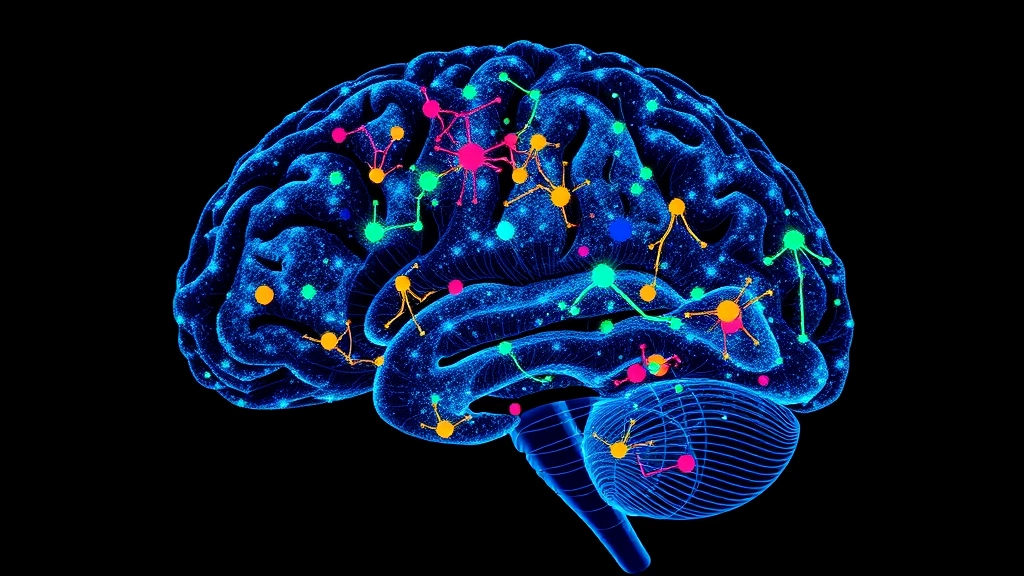
Scientists have built a detailed, cell-by-cell map of the striatum — a deep brain region governing movement, decision-making, habits and reward, implicated in Huntington’s disease, schizophrenia, depression and addiction.
Researchers at MIT, led by Professor Myriam Heiman, analysed 109 human and 22 mouse postmortem samples using single-nucleus RNA sequencing and spatial mapping. The atlas identified 31 neuronal subpopulations, including nine types of medium spiny neuron never previously classified. The work appeared in Cell.
Why the striatum
The striatum is where the cortex’s intentions get converted into action. It receives input from across the cortex and, through downstream circuits, gates which movements and behaviours are executed and which are suppressed.
Medium spiny neurons make up the overwhelming majority of its cells and have traditionally been divided into two classes — D1 and D2, named for the dopamine receptors they express — which broadly promote and suppress action respectively. That two-type framework has organised the field for decades.
Finding nine additional medium spiny neuron types substantially complicates it. A region treated as containing two functional populations turns out to contain many, and populations that were averaged together may behave and fail differently.
What single-nucleus sequencing adds
The method profiles gene expression in individual cell nuclei rather than in bulk tissue. That distinction matters because a bulk measurement of a brain region returns an average across every cell type present — and an average can obscure the fact that one small population has changed dramatically while others have not.
Using nuclei rather than whole cells is what makes postmortem human brain tractable: neurons are large and fragile with extensive processes that do not survive dissociation, but nuclei do. Adding spatial mapping preserves where each population sits, which in a region with functional subdivisions is essential rather than decorative.
Which cells disease targets
The map identified specific vulnerable populations rather than describing diffuse regional risk.
Certain neurons designated D1 outliers strongly expressed genes tied to substance use disorder, including opioid-response genes. Others, D2 outliers, expressed genes involved in antidepressant response. In the dorsal striatum, some neurons showed elevated MSH2 and MSH3.
The Huntington’s finding is the most concrete
The MSH2/MSH3 result explains something that has puzzled the field. Huntington’s is caused by an expanded CAG repeat in a gene expressed throughout the body — yet the disease destroys striatal neurons first and most severely. Why should a ubiquitous mutation devastate one specific population?
Part of the answer appears to be somatic instability. The CAG repeat is not fixed after conception; it can expand further within individual cells over a lifetime, and longer repeats are more toxic. That expansion is driven by DNA mismatch repair machinery — the very genes identified here.
Neurons with elevated MSH2 and MSH3 would expand their repeats faster, crossing the threshold to cell death sooner. Human genetic studies have independently implicated mismatch repair genes as modifiers of Huntington’s onset age, and this atlas supplies a cellular explanation for that association — and identifies mismatch repair as a therapeutic target aimed at slowing expansion rather than clearing the protein.
The warning about mouse models
One finding should give addiction researchers pause. The human mu-opioid receptor gene OPRM1 was highly active in human striatal neurons but not in the corresponding mouse cells.
OPRM1 encodes the receptor opioids act on — it is the direct target of morphine, fentanyl and heroin. If the cells expressing it differ between species, then mouse models of opioid reward and dependence may not reproduce the human circuitry in the population that matters most.
That is a substantive caution for a field that has relied heavily on rodent work, and it illustrates the value of profiling both species side by side rather than assuming correspondence.
What an atlas is for
This is infrastructure rather than a discovery about a single disease. Maps like this “lay the foundation for understanding how striatal cell types…contribute to…neurological disorders,” Heiman said — a resource other laboratories mine to ask targeted questions.
The practical payoff is precision. Knowing that a specific subpopulation is vulnerable allows therapies to be aimed at it, and allows experiments to measure the right cells rather than an average across a region.
The limits
These are postmortem samples — a snapshot at death, not a trajectory. Expression profiles are also influenced by agonal state, post-mortem interval and tissue handling, which is why large sample numbers matter.
How a cell atlas becomes a drug target
Resources like this are often described as foundational, which understates how directly they can change what gets developed.
Consider the Huntington’s finding. Therapeutic effort in the disease has concentrated almost entirely on lowering the huntingtin protein — attacking the toxic product. Identifying DNA mismatch repair activity as the driver of why particular neurons deteriorate first proposes a different intervention point: slow the somatic expansion of the repeat rather than clear what it produces.
That is a mechanistically distinct strategy with a different risk profile, since mismatch repair also protects against mutation elsewhere in the body, and it becomes conceivable only once the vulnerable population and its distinguishing feature have been identified. The same logic applies to the addiction findings: knowing which specific subpopulation carries opioid-response machinery makes it possible to ask targeted questions rather than treating the striatum as a single unit.
Crucially, the disease associations are correlations between gene expression and known risk genes, not demonstrations that these populations drive disease. That the MSH2/MSH3 finding converges with independent human genetics makes it the most robust of them — and shows what confirming the others would require. Research news, not medical advice.