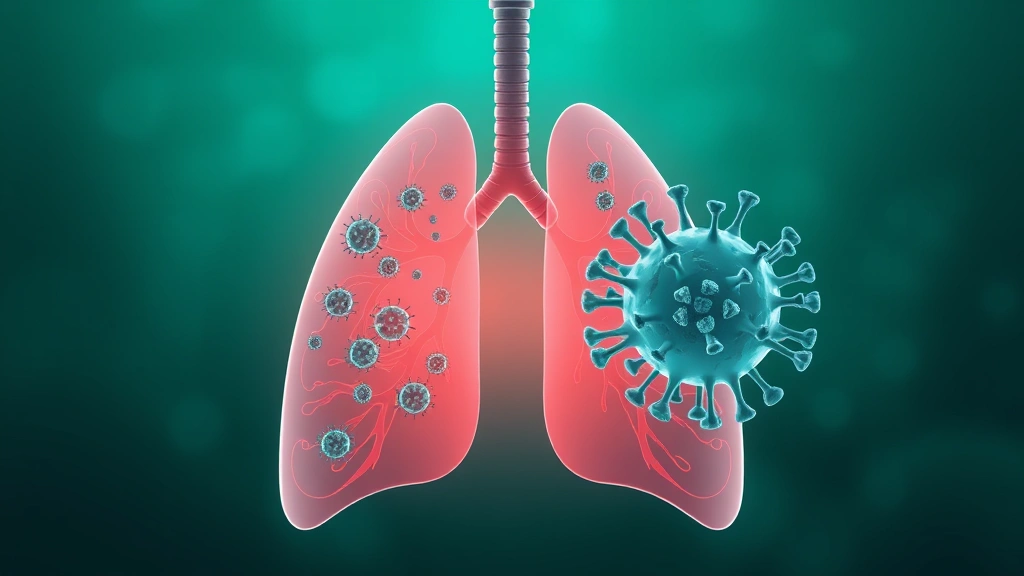
Most flu vaccines are built to trigger antibodies. New research points to a different, longer-lasting form of protection and an unexpected cell in the lungs that could make vaccines work better.
Scientists at the University of Rochester, led by Dr Minsoo Kim, found that certain monocyte-derived cells persist in the lungs for months after influenza infection, producing a protein called galectin-1. That protein sustains tissue-resident memory T cells at the site of viral entry. The findings were published in Nature Immunology.
Two kinds of immune protection
Understanding why this matters requires distinguishing what different vaccines actually achieve.
Injected vaccines generate circulating antibodies. These are excellent at preventing virus that reaches the bloodstream from causing severe disease, which is why such vaccines reduce hospitalisation and death effectively. What they do less well is stop infection at the point of entry, because antibody levels in the airway lining are far lower than in blood.
The consequence is familiar: people who are vaccinated still catch influenza, have milder illness, and can still transmit it. The vaccine is protecting the person without stopping the virus.
What tissue-resident memory T cells do
Tissue-resident memory T cells are a different kind of defence. Rather than circulating, they take up permanent residence in a tissue — here, the respiratory tract — and remain there on alert.
Because they sit exactly where respiratory viruses arrive, they can respond within hours rather than the days a circulating response requires. They also tend to recognise internal viral proteins that mutate more slowly than the surface proteins antibodies target, so their protection may hold up better as the virus drifts.
The known limitation is that these cells need maintenance. Without appropriate local signals they decline, and protection fades. What sustains them has been an open question.
The unexpected answer
The Rochester team found that monocyte-derived cells — part of the innate immune system, the fast, non-specific arm — linger in the lungs for months after infection and secrete galectin-1, which keeps resident memory T cells alive and functional.
“This challenges the traditional view that immune memory is driven only by T and B cells, and shows that innate immune cells also play a lasting role,” Kim said.
That reframing is the scientific substance of the paper. Innate immunity has been taught as the immediate, non-specific responder that hands off to adaptive immunity and then stands down. Here it is doing something durable: not remembering the pathogen itself, but maintaining the infrastructure that does.
Turning a mechanism into a vaccine component
The practical step followed directly. When researchers added galectin-1 to an experimental nasal flu vaccine in mice, the lung immune response strengthened significantly.
This positions galectin-1 as a potential adjuvant — a component added to a vaccine not because the immune system responds to it, but because it shapes how the immune system responds to the actual antigen. Existing adjuvants generally amplify the overall response; one that specifically sustains resident memory T cells in the airway would be doing something more targeted.
Why nasal delivery is the right pairing
Delivering the vaccine to the nose rather than the arm is essential to the strategy. Resident memory cells establish themselves in the tissue where antigen is encountered, so generating airway-resident immunity generally requires presenting antigen to the airway.
Nasal influenza vaccines exist, and their performance has been inconsistent — effective in some populations and seasons, disappointing in others, for reasons that have never been fully resolved. If part of the explanation is that they generate resident memory cells which are not adequately maintained, an adjuvant addressing maintenance directly would be attacking the actual weakness.
What a mucosal vaccine would change
The goal here is not marginally better protection but a different kind of it. A vaccine that stops infection at the point of entry would reduce transmission, not just illness.
That distinction has substantial public health consequences. Vaccines that prevent severe disease protect the recipient; vaccines that prevent infection protect the people around them too, including those who cannot be vaccinated or respond poorly. Achieving this for respiratory viruses has been a long-standing and largely unmet goal.
The caveats
This is mouse research, and mouse airways differ from human airways in structure, immune cell populations and exposure history. Human adults have encountered influenza repeatedly and carry pre-existing immunity that mice do not, which changes how any vaccine behaves.
Galectin-1 also has functions beyond this one, including roles in immune regulation and in cancer biology, so introducing it as a vaccine component would require careful safety characterisation rather than a straightforward formulation change.
And the strengthened lung immune response reported here is an immunological measurement, not a demonstration of protection against infection or transmission in a realistic challenge.
Why it is still notable
Mucosal vaccine development has been short of concrete levers — the goal is agreed and the mechanism has been hazy. Identifying a specific protein produced by a specific cell that maintains the specific population responsible for local protection converts an aspiration into an engineering problem. Preclinical research; not medical advice.