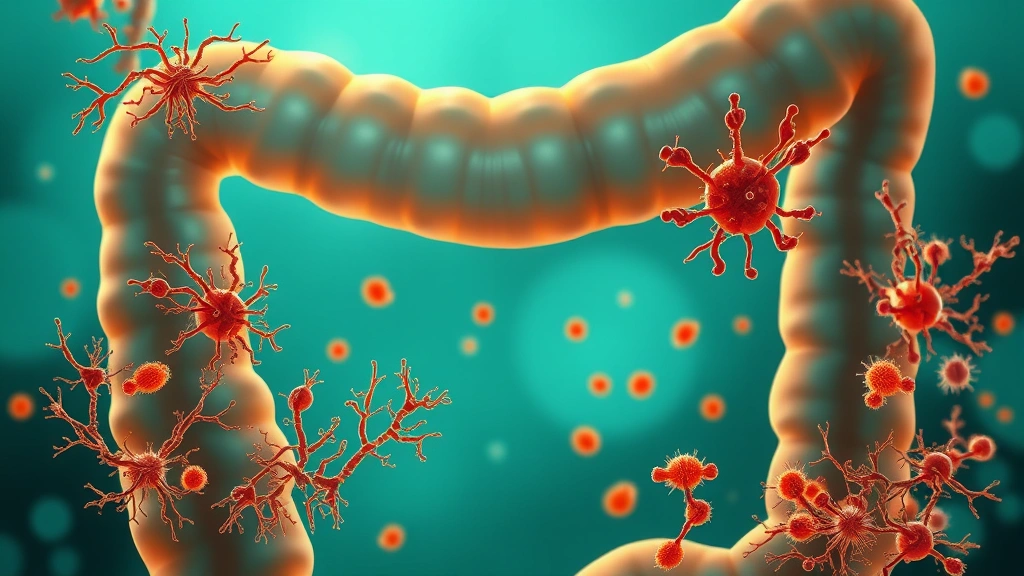
When gut bacteria run short of dietary fibre, they do not simply go hungry. They may start feeding on you — consuming the protective lining of the intestine.
Scientists at the Ludwig Institute for Cancer Research’s Princeton branch used isotope labelling to trace what gut microbes eat. When fibre was limited, bacteria broke down proteins from the gut’s mucus layer, producing harmful phenol metabolites including p-cresol sulfate and phenol sulfate. The findings appeared in PNAS and Nature Metabolism.
Why isotope labelling matters here
The method is what makes this more than an inference. Feeding animals nutrients tagged with heavy isotopes and then tracking where those atoms appear allows researchers to follow carbon and nitrogen from source to product.
Without it, one could observe that low-fibre diets alter microbial metabolites and only speculate about what the bacteria were consuming instead. Isotope tracing establishes the actual substrate — it shows the atoms in the harmful metabolites came from host mucus proteins rather than from diet.
What the mucus layer does
The intestinal lining is coated in a slick layer of mucus that serves a specific function: it keeps trillions of bacteria at a physical distance from the epithelial cells lining the gut.
That separation is essential. The gut contains an enormous microbial population that the immune system tolerates precisely because it stays on the correct side of a barrier. Thinning the mucus brings bacteria and bacterial products into contact with the intestinal wall, which drives inflammation and, if severe, allows bacterial components into the bloodstream.
So a diet causing microbes to consume mucus is not merely wasteful — it degrades a structure whose integrity keeps the whole arrangement stable.
The metabolites are the second problem
What bacteria produce from mucus protein is as concerning as the consumption itself.
p-cresol sulfate and phenol sulfate derive from bacterial fermentation of aromatic amino acids in protein, and both are uraemic toxins — compounds normally cleared by the kidneys that accumulate in kidney disease and contribute to its systemic effects.
They have been linked to worse outcomes in cancer patients and to systemic toxicity in people with kidney disease. p-cresol sulfate in particular has been associated with cardiovascular events and mortality in chronic kidney disease, which is why nephrology has taken an interest in gut-derived toxins.
The dietary fix built into the finding
Reassuringly, the study also identified a remedy in diet itself: both fibre and indigestible plant proteins shift the microbes back toward healthful byproducts.
“Both the fiber and indigestible proteins from plants shift the balance of phenol metabolites from the harmful kind…to the healthful variety,” the researchers reported.
The mechanism is straightforward once the problem is understood. Bacteria ferment whatever carbon source is available. Given fibre, they produce short-chain fatty acids that nourish the intestinal lining and support barrier function. Deprived of it, they turn to protein — and protein fermentation produces a different and less benign set of products.
It is a question of substrate rather than of which bacteria are present, which is why the fix is dietary rather than requiring a change in microbial composition.
Why indigestible plant protein is an interesting inclusion
The finding that indigestible plant proteins help as well as fibre is the less obvious half, and it complicates the simple message.
If protein fermentation produces the harmful metabolites, more protein reaching the colon might be expected to worsen things. That plant proteins have the opposite effect suggests the source matters — plausibly because plant protein arrives packaged with fibre and other plant material, or because its amino acid composition differs from the mucus proteins bacteria otherwise consume.
Why this reframes fibre advice
Fibre recommendations have traditionally been justified by bowel function and, more recently, by short-chain fatty acid production benefiting the colon.
This adds a different argument: fibre is not only feeding beneficial processes but preventing a harmful one. The cost of a low-fibre diet on this account is not merely a missed benefit but active degradation of the gut barrier and production of circulating toxins.
That is a stronger claim, and it makes the persistently low fibre intake typical of Western diets look more consequential than a shortfall against a recommendation.
The caveats
The work was done in mice, rats and human cell samples — not in people eating actual diets over time.
Rodent gut microbiomes differ substantially from human ones in composition, and rodent diets are far more controlled than anything a person eats. Whether the same substrate switching occurs at the fibre intakes typical of real Western diets, rather than the deliberately depleted diets used experimentally, is not established.
How much fibre people actually eat
The practical relevance of this depends on whether typical diets are fibre-depleted enough for the mechanism to matter, and the numbers are not encouraging.
Recommended intakes generally sit around 25 to 30 grams a day for adults, and average consumption in the United States and much of Europe runs closer to half that. A substantial majority of people fall short, and the shortfall has persisted for decades despite consistent public health messaging.
The reasons are structural rather than a failure of individual willpower. Fibre comes overwhelmingly from whole grains, legumes, vegetables, fruit and nuts, and modern food processing systematically removes it — refining grain strips the bran, and processed foods are formulated for shelf life and palatability rather than fibre content.
So the experimental condition producing mucus consumption in animals is not an artificial extreme. It is an exaggerated version of what a large share of the population eats routinely, which is what makes the mechanistic finding worth taking seriously rather than filing as a curiosity.
It is preclinical research adding mechanistic weight to familiar advice, and pointing to why fibre-poor diets may carry costs beyond the obvious. Research news, not medical advice.