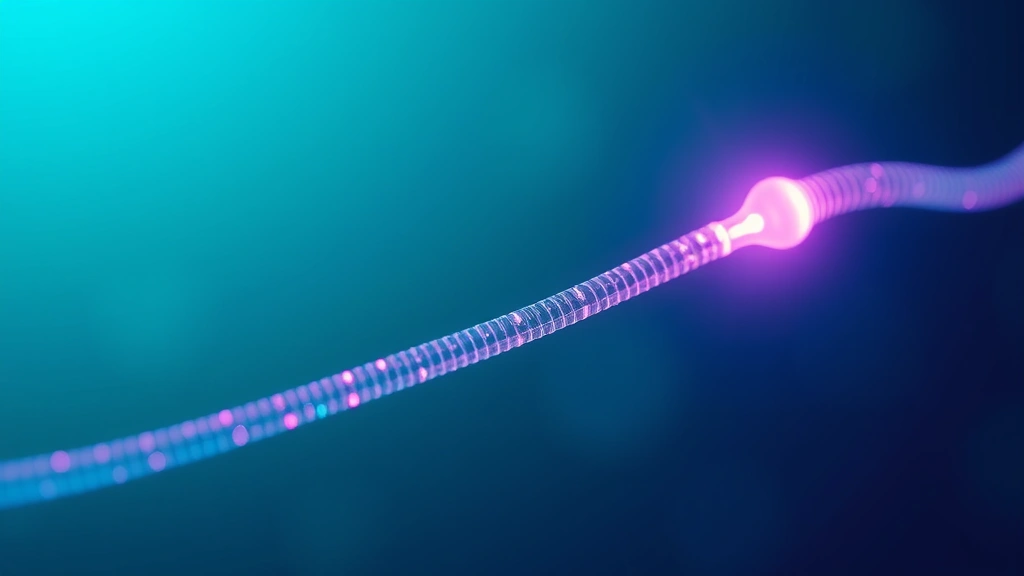
Scientists have built a needle-thin brain implant that does the work of three devices at once — recording brain activity, delivering drugs, and stimulating the brain — all from a single flexible fiber narrower than half a millimeter.
The three-in-one design
Studying and treating the brain usually requires different tools for different jobs: electrodes to record activity, tubes to deliver drugs, fibers to deliver light for stimulation. Implanting several devices means more surgery and more damage. The new device, called the microfluidic Axialtrode (mAxialtrode), packs all three capabilities into one strand: it can record neural activity, inject fluids (like drugs), and stimulate brain regions using both light and electrical signals.
How it’s made
The fiber is a small marvel of engineering. It’s made from a soft, plastic-like optical material, with a light-conducting core surrounded by eight microscopic channels that carry liquids and hold ultra-thin metal wires. It’s produced by heating a polymer rod and drawing it out into an extremely thin fiber — the same basic principle used to make optical fibers — yielding a strand less than half a millimeter across.
Why “soft” is the point
The most important feature may be what it’s not made of. “Most current brain implants are based on hard materials such as silicon, which can irritate the brain and trigger inflammatory reactions,” said researcher Kunyang Sui. Rigid implants provoke the body to wall them off with scar tissue, degrading their signal over time. A soft, flexible fiber moves more naturally with brain tissue, reducing inflammation and damage — potentially allowing implants that last longer and work better. And unlike a standard optical fiber that only interacts at its tip, this device has multiple functional points along its length, so a single implant can record and stimulate several brain regions at once, including both shallow and deep areas.
What it was tested on
In experiments in living mice, the device successfully stimulated the brain with blue and red light, recorded electrical activity from both shallow and deep regions, and injected substances at multiple depths — demonstrating all three functions in a living brain. The work, from the Technical University of Denmark and collaborators, was published in Advanced Science.
Why it matters — and the caveat
A single, gentle, multifunctional implant could be a powerful tool for both research (studying brain circuits) and, eventually, treatment of neurological disorders such as epilepsy, where recording seizures and delivering targeted therapy in one place would be valuable. But the researchers are explicit: the device is far from clinical use and requires extensive further testing and regulatory approval. It’s a promising engineering advance, tested in mice — an early step, not a therapy. Not medical advice.