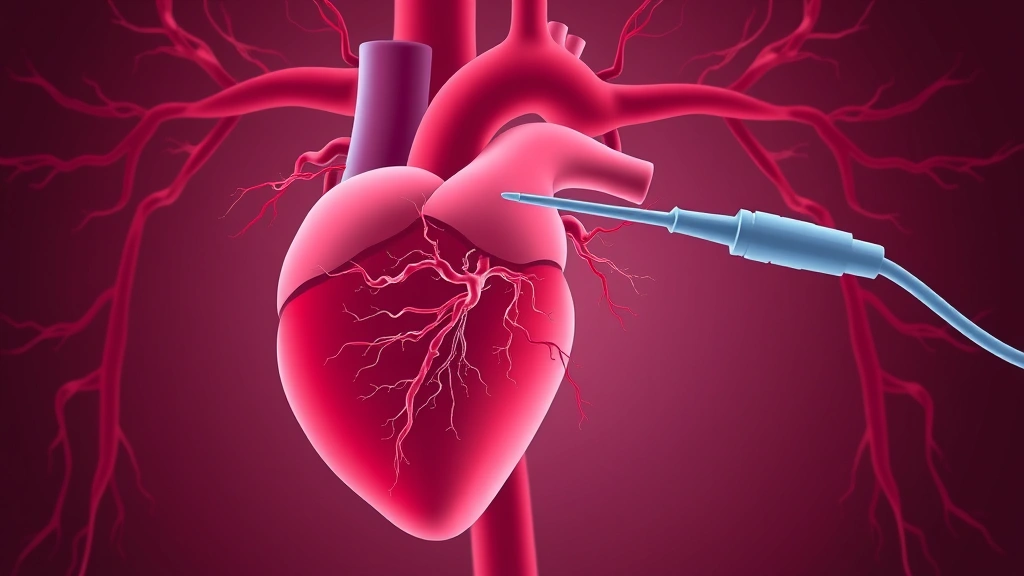
A minimally invasive catheter procedure that quiets overactive nerves around the pulmonary artery sharply reduced clinical worsening in high-risk heart-failure patients, according to a Phase 3 trial presented at the ESC Congress 2026.
PADN-HF-PH enrolled 264 patients with pulmonary hypertension due to left heart disease and heart failure, randomising them to pulmonary-artery denervation (PADN) plus guideline-directed medical therapy or medical therapy alone.
The condition, and why it has no treatment
When the left side of the heart fails, blood backs up into the lungs, pressure rises in the pulmonary arteries, and the right ventricle — a thin-walled chamber never designed to pump against high pressure — begins to strain and eventually fail. This is pulmonary hypertension due to left heart disease, and it is the most common form of pulmonary hypertension.
It is also, therapeutically, close to a dead end. Effective drugs exist for pulmonary arterial hypertension — the rarer form arising from disease of the pulmonary vessels themselves — and the obvious idea of using them here has been tried repeatedly. It does not work, and can cause harm: vasodilating the pulmonary circulation when the underlying problem is a failing left ventricle increases blood delivery to a chamber that cannot handle it, worsening congestion.
Current management therefore means treating the left-sided heart failure and hoping the pulmonary pressures follow. Often they do not.
The rationale for denervation
The pulmonary artery carries sympathetic nerve fibres, and in this condition they become chronically overactive, contributing to sustained vasoconstriction and remodelling. PADN threads a catheter into the pulmonary artery and ablates those nerves, aiming to interrupt the signalling that keeps the vessels constricted.
The appeal is that it addresses a maladaptive reflex rather than the pressure itself, potentially avoiding the problem that sinks vasodilator drugs.
The result
Over a median follow-up of about 11 months, clinical worsening — a composite of death, transplant, heart-failure hospitalisation, outpatient worsening, or a decline in walking distance — occurred in roughly 26% of the denervation group at two years, versus about 52% with medical therapy alone. Roughly a halving.
Safety looked reassuring: only minor access-site bruising, with no major complications reported.
The problem with the control arm
Here is the caveat that should govern how much weight this result carries. Patients were randomised to the procedure or to medical therapy alone — not to a sham procedure. Everyone knew which group they were in.
That matters enormously for this particular composite endpoint. Two of its components — outpatient worsening and decline in walking distance — are susceptible to expectation on the part of both patient and assessing clinician. A patient who knows they received an intervention may walk further on a six-minute test; a clinician who knows may interpret ambiguous symptoms differently.
Cardiology has a specific and painful precedent here. Renal denervation for hypertension produced striking results in unblinded trials, and then failed against a sham procedure when properly controlled. The technique was later refined and eventually did demonstrate benefit in sham-controlled trials — but only after years of correction. The lesson was not that denervation does not work; it was that unblinded procedural trials systematically overstate effect.
What is more persuasive in the data
Not all components of the composite are equally soft. Death, transplant and heart-failure hospitalisation are hard to influence through expectation. If the benefit is concentrated in those, the finding is considerably more robust than if it rests on walking distance and outpatient assessment.
The published breakdown of the composite is therefore the thing to look for, and it is the question anyone evaluating this technique should ask first.
What the investigators say
The trialists caution that longer follow-up is needed to confirm whether the mid-term benefit translates into sustained reductions in death and hospitalisation — an appropriately measured position given a median follow-up of around 11 months against outcomes reported at two years.
Why it still matters
Pulmonary hypertension in heart failure is a strong predictor of hospitalisation and death, the patient population is large, and the therapeutic options are genuinely poor. A safe catheter procedure that halved clinical worsening would be a meaningful addition even at a fraction of the observed effect.
Who these patients are
The population matters for judging how useful this could be. Pulmonary hypertension due to left heart disease develops in a substantial fraction of people with chronic heart failure, and it applies across both major forms — failure with reduced ejection fraction and the increasingly prevalent failure with preserved ejection fraction, for which treatment options remain notably thin.
Its appearance marks a turn for the worse. Once the right ventricle begins to fail under sustained pressure, patients accumulate hospitalisations, respond less well to diuretics, and their prognosis deteriorates sharply. Right heart failure is what many of these patients ultimately die of, even though the disease began on the left.
That is why a procedural option attracts interest despite the evidentiary caveats. The patients concerned are already on maximal medical therapy by definition — guideline-directed treatment was the comparator — and for them the alternative to a new intervention is not a different drug but continued decline.
The appropriate response is interest plus a demand for a sham-controlled confirmation — which is exactly the sequence renal denervation eventually went through. This summarises a clinical trial and is not medical advice.