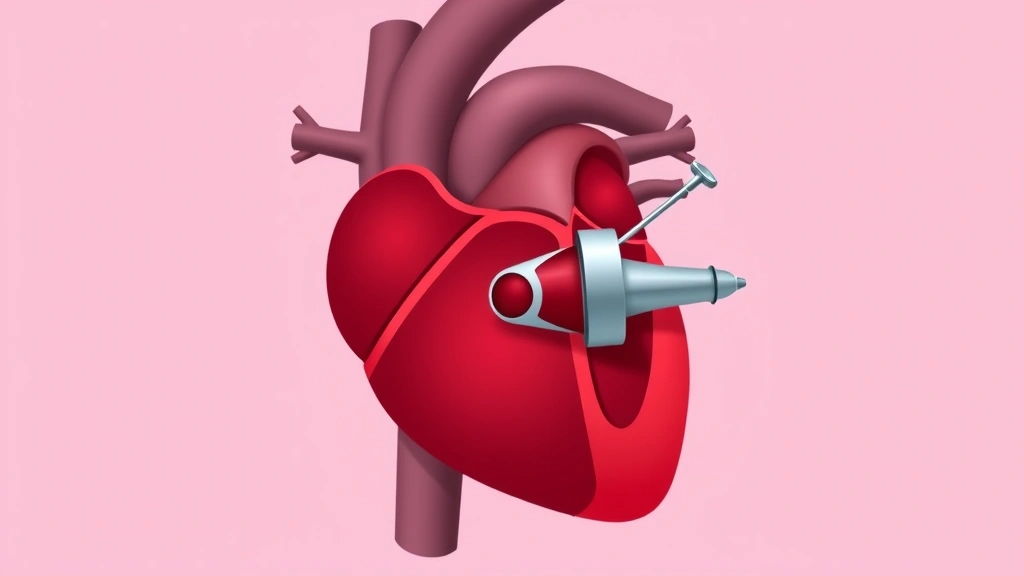
For years, minimally invasive repair of a leaky tricuspid valve improved how patients felt without clearly reducing deaths or hospitalisations. A new trial changes that.
In TRIC-I-HF, 360 patients (mean age 80) with symptomatic severe tricuspid regurgitation and heart failure were randomised 2:1 to transcatheter tricuspid valve repair plus medical therapy, or medical therapy alone. The result was a 60% relative reduction in the combined risk of death or heart-failure hospitalisation.
Findings were presented at ESC Congress 2026 and published in the New England Journal of Medicine.
The forgotten valve
The tricuspid sits between the right atrium and right ventricle, and it has been comparatively neglected for decades. Aortic and mitral valve disease attracted the research, the devices and the surgical expertise; the tricuspid was frequently observed rather than treated.
Several reasons combined. Right-sided heart disease was long regarded as less consequential than left-sided. Symptoms — swelling, fatigue, abdominal congestion — are non-specific and easily attributed to other conditions in older patients. And open surgical repair carries high risk in exactly the frail, elderly population most affected, so many patients were deemed inoperable and managed with diuretics.
What the disease does
When the tricuspid fails to seal, blood regurgitates backward into the right atrium with each contraction. Pressure backs up into the venous system, producing leg swelling, fluid accumulation in the abdomen and congestion of the liver and kidneys.
Over time the right ventricle dilates and weakens, and severe tricuspid regurgitation is independently associated with worse survival — it is not merely a marker of other disease.
The results in detail
Three-year event-free survival was 52.4% with repair versus 21% with medicine alone (hazard ratio 0.4), and the win ratio at one year favoured repair 2.42-to-1. The number needed to treat to prevent one event at a year was just four patients.
An NNT of four is genuinely unusual. Many accepted cardiovascular interventions have numbers needed to treat in the dozens or hundreds; treating four patients to prevent one event within a year indicates a large effect in a population with a high baseline event rate.
Those patients were, as the investigators noted, very sick — with high NT-proBNP levels, a marker of cardiac strain — which makes the benefit more notable rather than less, since sicker populations are usually harder to help.
Why this is a milestone
This is the first randomised trial to show hard-endpoint benefit from tricuspid repair, going beyond the symptom and quality-of-life gains of earlier studies.
That gap had become a real problem for the field. Previous randomised evidence showed patients felt better and functioned better after transcatheter tricuspid repair, but failed to demonstrate they lived longer or stayed out of hospital. Quality-of-life improvement is a legitimate goal, but it is a weaker basis for an invasive procedure in frail elderly patients, and it made reimbursement and guideline endorsement difficult.
The caveat: no sham control
Patients were randomised to the procedure or to medical therapy alone, not to a sham procedure. Everyone knew which group they were in, and that warrants care with a composite endpoint.
The reassurance here is stronger than in many unblinded procedural trials, because the components are hard. Death cannot be influenced by expectation. Heart-failure hospitalisation is more susceptible — admission decisions involve clinical judgement, and a physician who knows a patient did not receive the intervention may have a lower threshold — but it is far less soft than symptom scores or walking distance.
A mortality-inclusive composite showing this magnitude of effect is not the kind of result blinding usually overturns.
What it changes
Severe tricuspid regurgitation is common in older adults and has long lacked options short of high-risk surgery. Evidence that a catheter-based repair keeps people alive and out of hospital shifts the treatment question from whether it is worth doing to which patients should be referred.
The practical constraint becomes capacity and identification. Transcatheter valve procedures require specialised centres and trained operators, and a condition previously managed conservatively will generate referral volume those centres must absorb. Identifying patients is its own challenge, since many are currently managed on diuretics without ever being assessed for intervention.
What remains open
The population was specific: symptomatic severe regurgitation with heart failure and high NT-proBNP, mean age 80. Whether benefit extends to less severely affected patients, or to those without heart failure, is untested — and a treatment with an NNT of four in very sick patients may look quite different in milder disease.
Why right-sided heart failure is so hard to treat medically
Understanding why a mechanical fix produces this much benefit requires appreciating how little medicine can offer these patients.
Left-sided heart failure has an extensive evidence-based drug armoury — several classes with demonstrated mortality benefit, refined over decades of large trials. Right-sided failure driven by valve regurgitation has essentially none of that. Diuretics relieve congestion by removing fluid, but they do nothing about the leaking valve generating it, and aggressive diuresis in these patients risks kidney injury and electrolyte disturbance.
The result is a management approach that treats the symptom while the mechanical problem continues, with the right ventricle progressively dilating and the regurgitation typically worsening as it does — a self-reinforcing loop. Against that trajectory, an intervention that addresses the valve itself is attacking the cause rather than managing the consequence, which is a plausible explanation for an effect size that would look implausible in a better-served condition.
Durability beyond three years and how results transfer outside experienced trial centres also remain to be established. Clinical trial news, not medical advice.