Walking feels effortless when you are young and tends to get harder with age — and researchers now have a clearer picture of why, starting at the ankle.
In a study of 107 adults aged 26 to 86, researchers from Flinders University and the University of Canberra found that as people age, opposing muscles around the ankle increasingly tense against each other — co-contraction — producing a stiffer, more stable joint that generates less push-off power. The work appeared in Gait & Posture.
What co-contraction means
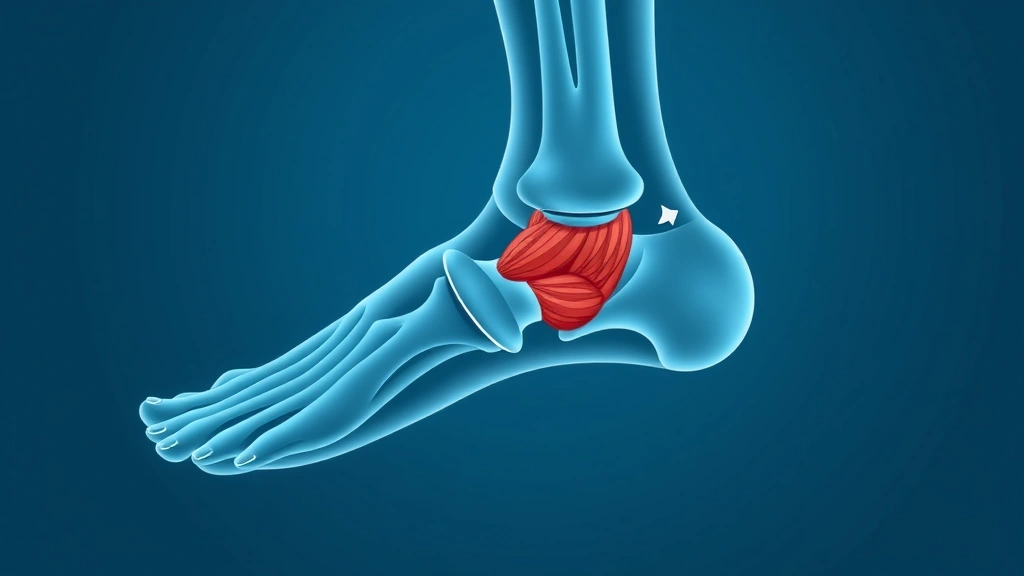
Most joints are controlled by opposing muscle groups. At the ankle, calf muscles point the foot down and muscles at the front of the shin pull it up, and efficient movement normally involves activating one while the other relaxes.
Co-contraction is both firing at once. The joint becomes stiffer and more stable because opposing forces hold it in place — and the muscles are working against each other rather than producing movement.
Everyone does this to some degree, particularly when learning a movement or when balance is threatened. What the study describes is co-contraction increasing systematically with age during ordinary walking.
Why the ankle matters so much for walking
The ankle is where most of the propulsive work of walking happens, which is easy to overlook.
At the end of each step, the calf muscles and Achilles tendon push the foot down against the ground, propelling the body forward and upward into the next step. That push-off is the single largest source of positive work in the gait cycle.
It is also highly efficient, because the Achilles tendon acts as a spring. It stretches as weight loads the ankle, storing elastic energy, then recoils to release it — so a substantial portion of the energy for push-off comes from stored elastic recoil rather than muscle contraction. Walking is cheap because of that mechanism.
A stiffer ankle interferes with it directly. A joint held rigid by opposing muscle activation does not permit the stretch-and-recoil cycle, so more of the work must come from muscle — which is metabolically expensive.
The trade-off
The researchers describe the change as the body prioritising stability over efficiency — stiffening the ankle to reduce the risk of stumbling, at the cost of the springy push-off powering a smooth, economical stride.
Read that way, it is not a failure but an adaptation, and possibly a sensible one. Falls are among the most serious threats to older adults’ independence, and a hip fracture frequently marks the end of independent living. Trading efficiency for stability is a reasonable exchange if the alternative is falling.
That framing matters for what to do about it. A maladaptive pattern should be corrected; a protective adaptation should be understood before being interfered with.
What it explains
The finding accounts for something clinically familiar: older adults often walk more slowly and tire more easily without obvious injury or disease.
Slower walking has generally been attributed to muscle weakness, joint problems or reduced fitness. Those contribute, and this identifies an additional mechanism — the same muscles working harder to produce less forward motion, so walking becomes more effortful even where strength is preserved.
Walking speed is also one of the better predictors of health outcomes in older adults, associated with survival, hospitalisation and disability. Understanding what drives its decline is therefore more consequential than a gait measurement might suggest.
What might be done
Understanding where and how walking efficiency is lost could guide better exercise and rehabilitation strategies — for example, training targeting ankle strength and coordination.
Coordination is the more interesting half. If the problem were weakness, strengthening would address it. If the problem is a control strategy — the nervous system choosing to co-contract — then training must address how muscles are activated rather than how strong they are, which is a different kind of intervention.
Balance training may be the indirect route. If co-contraction is a response to perceived instability, improving balance confidence could reduce the need for it, allowing a more efficient pattern to return without targeting the ankle directly.
The limits
This is a cross-sectional study comparing people of different ages rather than following individuals over time, so it describes a difference between age groups rather than a change within people.
Why walking speed predicts so much
The clinical interest in gait comes from an observation that surprises people outside geriatrics: how fast someone walks predicts their health outcomes remarkably well.
Walking speed measured over a few metres has been associated with survival, hospitalisation, disability and cognitive decline across many studies, frequently outperforming more elaborate assessments. Some clinicians describe it as a functional vital sign.
The likely explanation is that walking integrates a great deal. It requires cardiovascular capacity, muscle strength, joint function, balance, vision, and the neurological coordination to combine them — so a decline in any of those systems shows up in gait, and a person walking briskly is demonstrating that all of them are working.
That is what gives a mechanistic finding about ankle stiffness broader significance. Identifying a specific, potentially trainable contributor to slowing gait is not just about walking comfort — it targets a measure that tracks the trajectory clinicians use to judge how someone is ageing overall.
Whether reducing co-contraction would improve efficiency without increasing fall risk is also untested — and given what the adaptation appears to be for, that is the question any intervention would need to answer first. Research news, not medical advice.