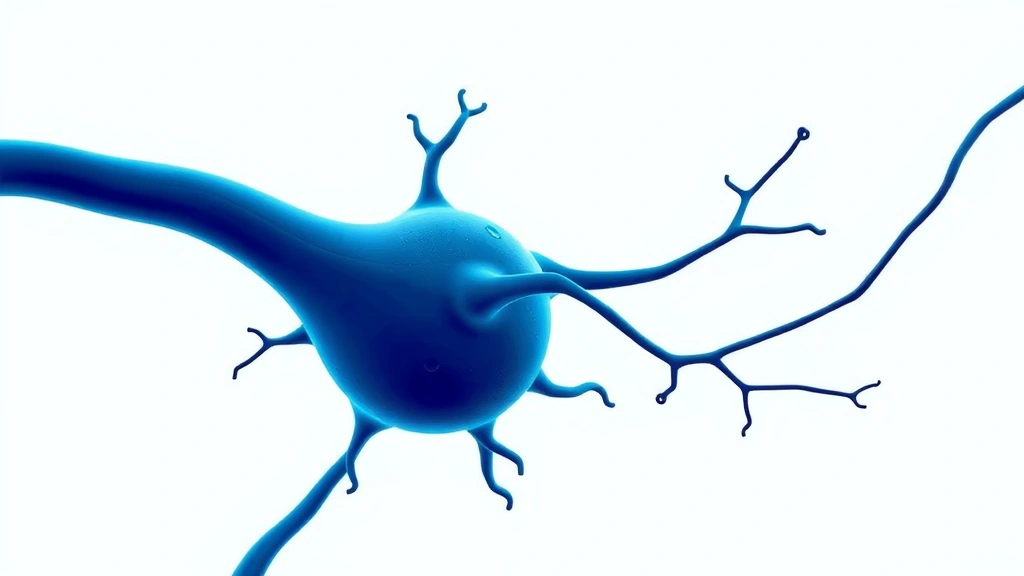
Damaged nerves, especially in the spinal cord, often fail to regrow, leaving permanent loss of movement or sensation. Researchers have identified a molecular brake holding that regrowth back, and shown that releasing it helps nerves heal in mice.
Scientists at the Icahn School of Medicine at Mount Sinai, led by Dr Hongyan Zou, found that the aryl hydrocarbon receptor (AHR) suppresses axon growth after injury. The work was published in Nature.
Why the nervous system heals unevenly
The starting puzzle is that regeneration is not uniformly impossible. Cut a nerve in an arm and axons will often regrow along their original path, sometimes restoring useful function. Damage the spinal cord and equivalent regrowth essentially does not occur.
Both involve the same cell type attempting the same repair, which tells you the difference lies in the response rather than in some inherent incapacity of neurons. Decades of work have identified inhibitory molecules in central nervous system tissue and the scar that forms after injury, and interventions targeting those have produced partial and inconsistent improvement.
The switch this study identifies
The Mount Sinai finding concerns something different: not an external obstacle but an internal decision the neuron makes.
After injury a neuron faces a choice. It can enter a defensive mode focused on survival — managing stress, limiting damage, conserving resources. Or it can commit to repair, which requires ramping up production of the proteins needed to rebuild axons, an enormous metabolic investment for a cell already under strain.
AHR appears to bias that choice toward the defensive option. Blocking it shifts neurons away from mere stress-management and toward repair, increasing the protein synthesis regeneration requires.
“By releasing this brake, we can push neurons into a state that favors repair,” the researchers said.
What removing the brake achieved
In mouse models of both peripheral nerve damage and spinal cord injury, removing or inhibiting AHR improved recovery of movement and sensation.
Testing both matters. Peripheral nerve models are more permissive and often show improvement; demonstrating benefit in spinal cord injury as well addresses the far harder problem and the one with the greatest clinical need.
Why the target is unusually practical
The most consequential feature of this finding is not biological but pharmacological: several AHR-inhibiting drugs are already in clinical trials for other conditions.
That could shorten the path considerably. A novel target normally means years of medicinal chemistry, optimisation and toxicology before a compound reaches humans. Existing clinical-stage inhibitors mean human safety data, established pharmacokinetics and known dosing already exist — and a candidate for repurposing rather than a starting point.
The team plans to explore both drug-based and gene-therapy approaches targeting AHR specifically in neurons.
Why neuron-specific targeting matters
That specificity is not a refinement; it is a requirement. AHR is not a neuronal protein — it is expressed widely and has substantial roles in immune regulation, barrier tissue function and the response to environmental compounds.
Systemic AHR inhibition would therefore affect much more than injured neurons, with immune consequences among the most predictable. Achieving the benefit without those effects means either delivering the drug locally, or using gene therapy to alter AHR only in the cells that need it.
The timing problem nobody has solved
One question this work does not address is when such a treatment would need to be given.
Regeneration research has consistently found that the window after injury matters enormously. Interventions effective when applied immediately often do nothing weeks later, once the injury environment has changed and the neuron’s own state has settled. If AHR blockade must be initiated within days, it becomes an acute intervention requiring rapid diagnosis and treatment — useful, but of no help to the far larger population living with established injury.
The caveats
This is preclinical work. Rodent spinal cord injury models differ from human injury in mechanism, scale and the distance axons must regrow — a mouse spinal cord is a few centimetres long, a human one is not, and regeneration over greater distances is disproportionately harder.
“Improved recovery of movement and sensation” in mice is also measured on scales that do not translate directly to meaningful human function. The field has a long history of interventions producing measurable rodent improvement and nothing clinically useful.
Why it is still notable
Spinal cord injury has few effective treatments, and most research effort has gone toward removing external inhibitors. Identifying an internal switch that biases neurons away from repair — and one for which clinical-stage drugs already exist — is a concrete, actionable target rather than another mechanism awaiting a compound. Preclinical research; not medical advice.