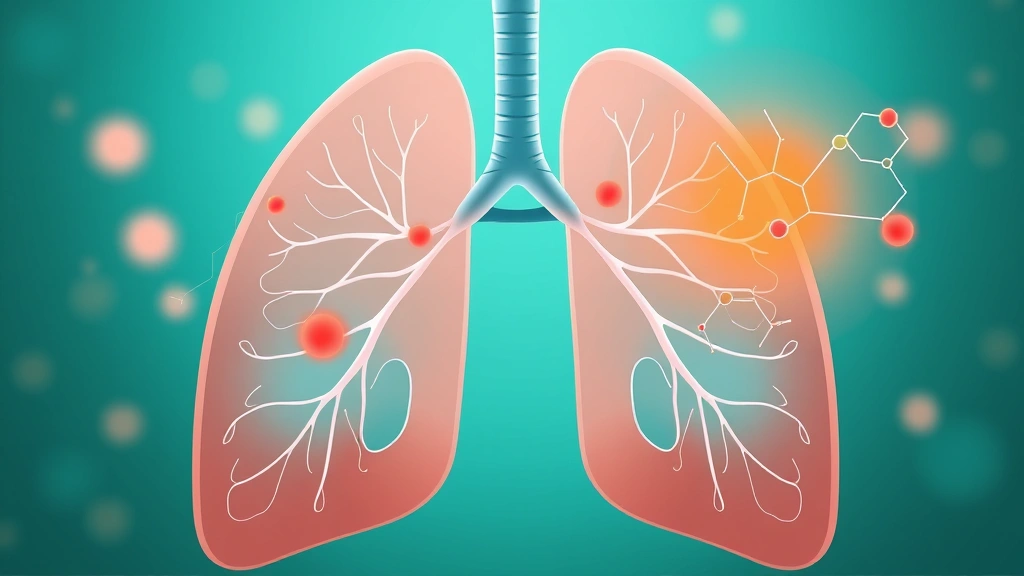
Asthma has a curious pattern: it is more common in boys before puberty, then more common in women in adulthood. A mouse study points to a mechanism — male sex hormones acting on nerves — that could help explain the switch.
Researchers at Peking University and Peking University Third Hospital, led by Xiaofan Tu, published the work in Science Immunology.
The pattern that needs explaining
The sex reversal in asthma is well documented and long unexplained. In childhood, boys are affected more often and more severely. Around puberty the pattern inverts, and in adulthood women have higher prevalence, more severe disease and more hospital admissions.
The timing points to hormones, and that inference has been available for decades. What has been missing is a mechanism — how a circulating hormone translates into a different immune response in the airway.
The proposed answer runs through the nervous system
The researchers found that androgens suppress allergic lung inflammation in mice by enhancing the development of sympathetic nerves in the lungs and the release of norepinephrine.
That is a more interesting claim than hormones acting on immune cells directly. It proposes a three-step chain: male hormones promote nerve development in lung tissue; those nerves release norepinephrine; and norepinephrine dampens the immune response.
Specifically, norepinephrine reduced eosinophil-recruiting signals from immune cells. Eosinophils are the white blood cells central to allergic airway inflammation, so fewer recruitment signals means fewer arriving and less inflammation.
Why involving nerves is plausible
Neuro-immune interaction has become an established field, and the lung is a well-studied example. Airways are densely innervated by autonomic nerves controlling smooth muscle tone, mucus secretion and blood flow, and those nerves also communicate with immune cells.
There is a strong clinical hint that this axis matters in asthma: the fastest-acting asthma medications are beta-agonists, which act on the same receptors norepinephrine engages. Reliever inhalers work by exploiting this system pharmacologically, which makes a hormone that strengthens it endogenously a coherent proposition.
Connecting to what clinicians observe
The findings offer a possible explanation for why “a significant proportion of paediatric patients experience asthma remission, a phenomenon that is more common in males than females,” the authors noted — a shift coinciding with puberty’s hormonal changes.
Childhood asthma remitting around adolescence is a real and familiar pattern, and its male predominance has been documented without being explained. In the authors’ framing, “male gonadal hormones dampen allergic inflammation and contribute to sexually dimorphic type 2 responses during peripubertal stages.”
Why the mechanism matters more than the association
Knowing hormones influence asthma is not actionable — manipulating sex hormones to treat asthma would be unacceptable given the systemic consequences.
Identifying the pathway changes that. If the effect operates through sympathetic nerve development and norepinephrine signalling, then the intervention point is the nerve-immune interface rather than the hormone. Targeting that could in principle reproduce the protective effect without touching hormonal biology — which is the practical value of a mechanistic finding over a correlational one.
The developmental angle
One detail deserves emphasis: the effect involves enhancing the development of nerves, not merely their moment-to-moment activity.
That implies a structural change laid down during a particular window, which fits the timing — peripubertal — and would explain why the sex difference persists into adulthood rather than fluctuating with hormone levels.
It also implies the opportunity may be time-limited. An intervention reproducing this effect might need to act during development rather than in established disease, which is a considerably harder therapeutic proposition.
The caveats
This is mouse research, and allergic airway inflammation in mice is an induced model rather than spontaneous asthma. Mice do not develop asthma naturally, and the models capture aspects of the human condition without reproducing it.
Human asthma is also more heterogeneous than the type 2 eosinophilic inflammation modelled here. A substantial proportion of adult asthma is non-eosinophilic, driven by different mechanisms, and a pathway explaining eosinophilic disease would not necessarily explain the rest — including some of the adult female predominance the study seeks to account for.
Sex differences in disease are systematically understudied
This work sits within a broader correction that has been underway for some years.
Preclinical research historically used male animals by default, on the reasoning that hormonal cycling in females introduced variability that complicated experiments. The consequence was that sex differences were not merely unexplained — they were largely unexamined, because the experiments were not designed to detect them.
Funders now generally require sex to be considered as a biological variable, which has begun producing findings like this one: mechanisms that operate differently between sexes and had simply not been looked for.
Asthma is a good illustration of what was missed. A sex reversal at puberty affecting hundreds of millions of people worldwide is not a subtle phenomenon, and it remained mechanistically unexplained largely because the question was rarely the object of study. The same is likely true of other conditions with documented sex differences in prevalence, severity or treatment response — autoimmune disease and pain conditions prominent among them.
Whether the same pathway operates in people, and how to act on it safely, remains to be shown. This summarises early research and is not medical advice.