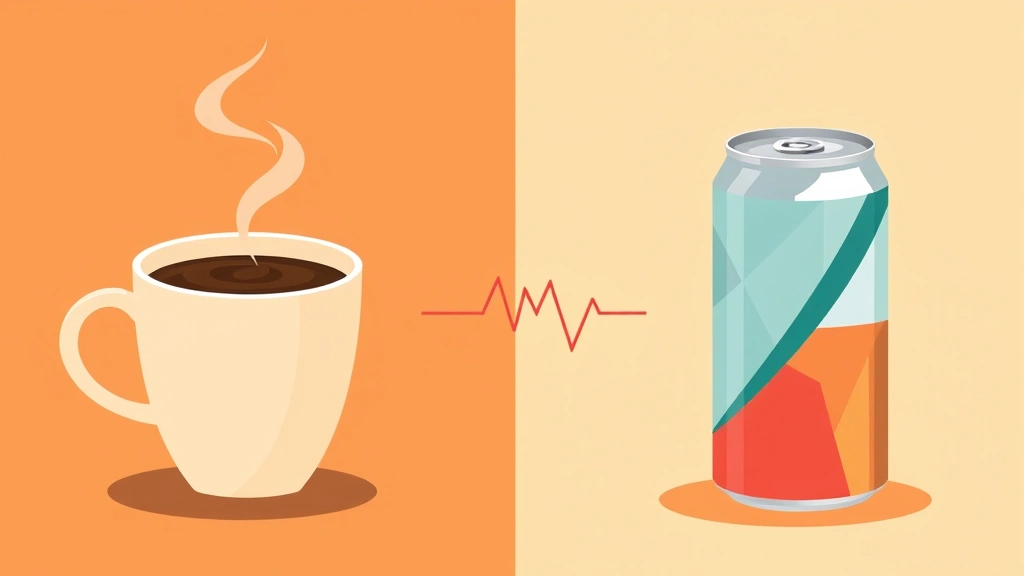
Your daily coffee is probably fine for your heart — and may even help it. Energy drinks are a different story. That is the message of a scientific statement from the American Heart Association, published in Circulation.
The statement concludes that caffeine intake up to about 400 milligrams a day — roughly three to five cups of coffee — is generally safe for most adults, and that coffee consumption is associated with lower risks of heart disease, stroke, heart failure and type 2 diabetes.
Not all caffeine is equal
The concern is concentration. Energy drinks and energy shots pack far more caffeine per ounce than brewed coffee — about 40 to 69 milligrams per fluid ounce, versus roughly 9 to 21 for regular coffee.
That means a small serving can deliver a large, rapid dose, often alongside other stimulants and sugar.
Why rate of intake matters more than total
The distinction the statement draws is not about the daily total but about how quickly it arrives, and the physiology explains why.
Caffeine raises heart rate and blood pressure and increases circulating adrenaline, and the size of those effects depends on peak blood concentration. A dose absorbed gradually produces a modest, sustained rise; the same dose absorbed rapidly produces a spike.
Coffee is hot and consumed slowly over minutes, and a cup delivers a moderate amount. An energy shot is a small volume swallowed at once, delivering several times that concentration in seconds — and the peak, not the area under the curve, is what provokes arrhythmia in a susceptible heart.
The other ingredients
Energy drinks are not simply caffeine in a can, which complicates attributing any effect to caffeine alone.
They commonly contain taurine, guarana — itself a caffeine source, sometimes not counted in the stated caffeine content — B vitamins in large doses, and substantial sugar. Whether these interact meaningfully with caffeine is not well established, and it means the exposure differs from the same caffeine dose in coffee in more than concentration.
“High doses of caffeine, such as those found in energy drinks including energy shots, may have harmful effects on the heart and should be avoided,” said Dr Gregory M. Marcus, who chaired the writing group.
Why coffee might be protective anyway
The association between coffee and lower cardiovascular risk is consistent across many populations, and caffeine is unlikely to be the explanation.
Coffee contains hundreds of compounds, including chlorogenic acids and other polyphenols with antioxidant and anti-inflammatory activity, and decaffeinated coffee shows similar associations in several studies — which points away from caffeine as the active element.
The important caveat
The AHA notes that much of the underlying research is observational — identifying associations, not cause and effect — and calls for more rigorous randomised trials.
The specific difficulty in coffee research is that coffee drinking correlates with a great many other things: income, education, smoking status, working patterns, and whether someone is well enough to want it. Statistical adjustment handles measured confounders and cannot handle unmeasured ones.
In plain terms: the data suggest moderate coffee is compatible with a healthy heart, but do not prove coffee itself is protective.
What it means for you
For most healthy adults, a few cups a day appear reasonable, while concentrated energy drinks are worth approaching with caution — especially for people with heart conditions or with inherited arrhythmia syndromes, where a sudden adrenergic surge carries specific risk.
Who should be more careful
The 400 mg guidance applies to healthy adults, and several groups sit outside that.
Pregnancy is the clearest case, with guidance generally setting a substantially lower limit — caffeine crosses the placenta and the fetus metabolises it far more slowly than an adult.
Adolescents are the group energy drinks reach most and where guidance is most cautious. Smaller body size means the same can delivers a higher dose per kilogram, and consumption patterns — several drinks in a session, sometimes combined with alcohol — differ from how adults drink coffee.
People with arrhythmias, uncontrolled hypertension or inherited cardiac conditions have specific reason for caution, since the concern is an adrenergic surge in a heart already predisposed to abnormal rhythms.
Metabolism varies more than most people realise
How quickly caffeine is cleared differs several-fold between individuals, largely through variation in a single liver enzyme. Slow metabolisers reach higher concentrations and sustain them longer from an identical dose.
Some medications inhibit the same enzyme, and smoking induces it — which is why people who stop smoking often find their usual coffee intake suddenly feels excessive.
The practical implication is that a population-level limit is a rough guide. Someone who feels jittery, sleeps poorly or notices palpitations at intakes well below 400 mg is not misreading their own response.
Individual circumstances vary, so talk to your doctor about what is right for you. General information, not medical advice.